#28 Sulforaphane and Its Effects on Cancer, Mortality, Aging, Brain and Behavior, Heart Disease, & More
Enter your email to get our 15-page guide to sprouting broccoli and learn about the science of chemoprotective compount sulforaphane.
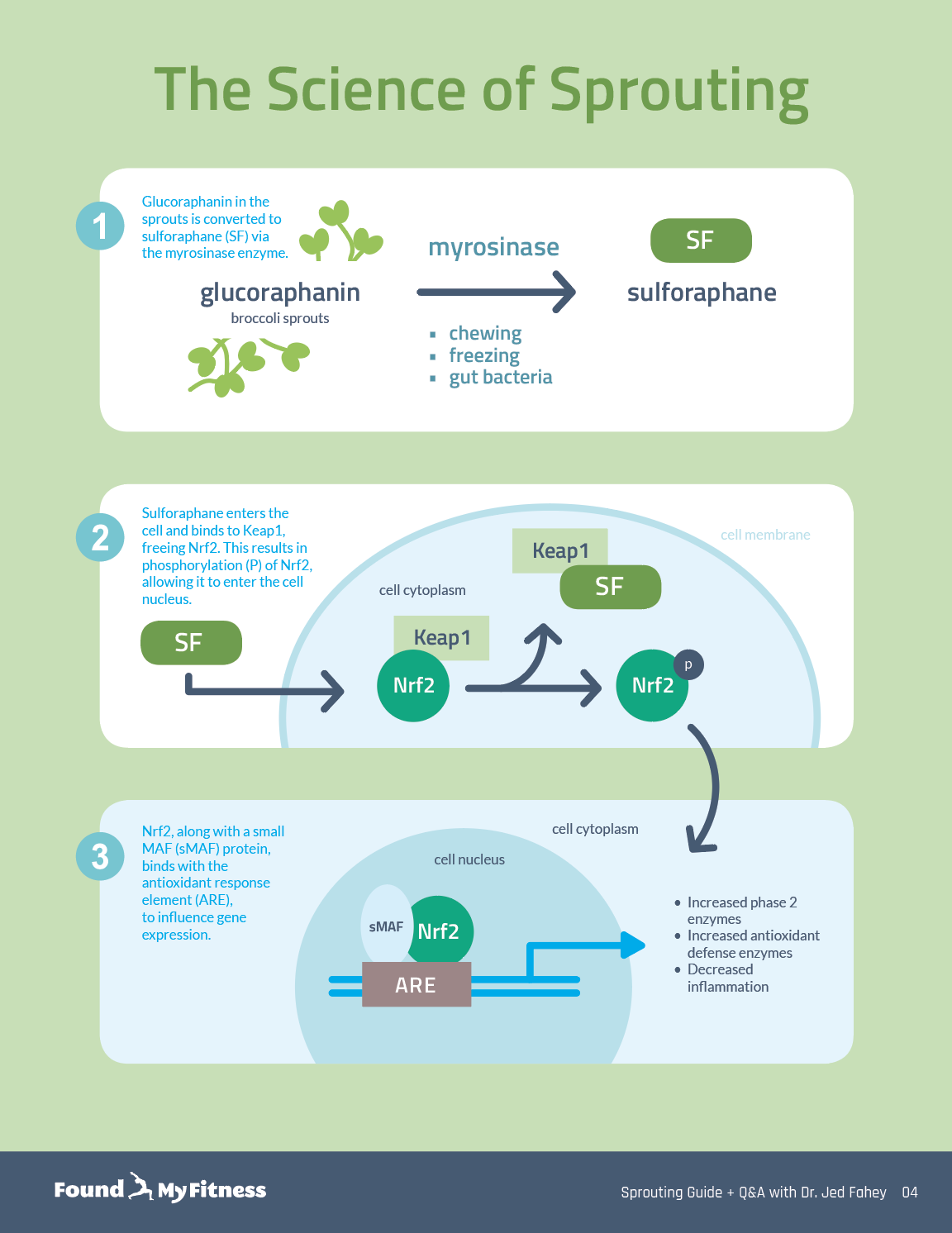
Broccoli sprouts are concentrated sources of sulforaphane, a type of isothiocyanate. Damaging broccoli sprouts – when chewing, chopping, or freezing – triggers an enzymatic reaction in the tiny plants that produces sulforaphane.
This episode is available in a convenient podcast format.
These episodes make great companion listening for a long drive.

This podcast is about one of the most important biological pathways you could possibly take the time to learn about: the NRF2 pathway.
The most potent naturally-occurring inducer of this pathway is a plant compound known as sulforaphane, which many studies suggest may have properties that prove to be therapeutic in many different contexts. No greedy capitalists are conspiring to keep it out of your hands because it's naturally produced in large quantities by none other than the humble... broccoli sprout!
There is so much to say when we talk about the NRF2 pathway and isothiocyanates like sulforaphane that we had to pack it into 47 minutes and break it into a few key sections.
Key sections:
-
Cancer and mortality
-
Aging
-
Brain and behavior
-
Final recap
-
Dose
For a more in-depth breakdown click the timeline link at the top of this page!
-
Introduction of sulforaphane, a major focus of the video.
-
Cruciferous vegetable consumption and reductions in all-cause mortality.
-
Prostate cancer risk.
-
Bladder cancer risk.
-
Lung cancer in smokers risk.
-
Breast cancer risk.
-
Hypothetical: what if you already have cancer? (interventional)
-
Plausible mechanism driving the cancer and mortality associative data.
-
Sulforaphane and cancer.
-
Animal evidence showing strong effect of broccoli sprout extract on bladder tumor development in rats.
-
Effect of direct supplementation of sulforaphane in prostate cancer patients.
-
Bioaccumulation of isothiocyanate metabolites in actual breast tissue.
-
Inhibition of breast cancer stem cells.
-
History lesson: brassicas were established as having health properties even in ancient Rome.
-
Sulforaphane's ability to enhance carcinogen excretion (benzene, acrolein).
-
NRF2 as a genetic switch via antioxidant response elements.
-
How NRF2 activation enhances carcinogen excretion via glutathione-S-conjugates.
-
Brussels sprouts increase glutathione-S-transferase and reduce DNA damage.
-
Broccoli sprout drink increases benzene excretion by 61%.
-
Broccoli sprout homogenate increases antioxidant enzymes in the upper airway.
-
Cruciferous vegetable consumption and heart disease mortality.
-
Broccoli sprout powder improves blood lipids and overall heart disease risk in type 2 diabetics.
-
Beginning of aging section.
-
Sulforaphane-enriched diet enhances lifespan of beetles from 15 to 30% (in certain conditions).
-
Importance of low inflammation for longevity.
-
Cruciferous vegetables and broccoli sprout powder seem to reduce a wide variety of inflammatory markers in humans.
-
Mid-video recap: cancer, aging sections
-
Mouse studies suggest sulforaphane might improve adaptive immune function in old age.
-
Sulforaphane improved hair growth in a mouse model of balding. Picture at 00:26:10.
-
Beginning of brain and behavior section.
-
Effect of broccoli sprout extract on autism.
-
Effect of glucoraphanin on schizophrenia.
-
Start of depression discussion (plausible mechanism and studies).
-
Mouse study using 10 different models of stress-induced depression show sulforaphane similarly effective as fluoxetine (prozac).
-
Study shows direct ingestion of glucoraphanin in mice is similarly effective at preventing depression from social defeat stress model.
-
Beginning of neurodegeneration section.
-
Sulforaphane and Alzheimer's disease.
-
Sulforaphane and Parkinson's disease.
-
Sulforaphane and Hungtington's disease.
-
Sulforaphane increases heat shock proteins.
-
Beginning of traumatic brain injury section.
-
Sulforaphane injected immediately after TBI improves memory (mouse study).
-
Sulforaphane and neuronal plasticity.
-
Sulforaphane improves learning in model of type II diabetes in mice.
-
Sulforaphane and duchenne muscular dystrophy.
-
Myostatin inhibition in muscle satellite cells (in vitro).
-
Late-video recap: mortality and cancer, DNA damage, oxidative stress and inflammation, benzene excretion, cardiovascular disease, type II diabetes, effects on the brain (depression, autism, schizophrenia, neurodegeneration), NRF2 pathway.
-
Thoughts on figuring out a dose of broccoli sprouts or sulforaphane.
-
Anecdotes on sprouting at home.
-
On cooking temperatures and sulforaphane activity.
-
Gut bacteria conversion of sulforaphane from glucoraphanin.
-
Supplements work better when combined with active myrosinase from vegetables.
-
Cooking techniques and cruciferous vegetables.
-
Isothiocyanates as goitrogens.
Dr. Rhonda Patrick here. Today is a big day. We're going to be talking about some pretty important stuff. I'm very excited. We're going to be talking about cruciferous vegetables as a group. In other words, we're going to be talking about broccoli, Brussels sprouts, cauliflower, cabbage, collard greens, bok choy, pak choy, watercress, landcress, radish, daikon, wasabi— yes, wasabi, it's a cruciferous vegetable— Who knew? We're also going to be talking about broccoli sprouts. So much about broccoli sprouts. And more importantly, sulforaphane. We're going to talk about how sulforaphane is the most potent naturally occurring dietary activator of the genetic pathway Nrf2, which regulates over 200 different genes.
Many genes which are antioxidant, anti-inflammatory, and genes that are involved in inactivating potentially harmful compounds that we may be exposed to on a daily basis. We're going to be talking about the cancer preventative effects of sulforaphane, its effects on cardiovascular disease, and on the brain. We're going to be talking about its effects on excreting carcinogens, bioavailability, and dose. And we're going to talk about how I'm able to sustain my 40 to 60 milligrams of sulforaphane a day by sprouting, and so much more. Let's start with the basics, and by basics I mean staying alive.
In 2011, a study was published in the American Journal of Clinical Nutrition that showed if we took the population and divided them up by their vegetable consumption, Those in the top 20% of the population eating the most vegetables had a 16% reduction in what is known as all-cause mortality. What this means is that for that period of time studied, they were 16% less likely to die from all non-accidental deaths compared to others in their age group, regardless of many other health factors like exercise. Hey, that's pretty good, right? But if instead of just looking at vegetable consumption, we look at the top 20% of cruciferous vegetable consumers, The effect on all-cause mortality is even more substantial.
The top 20% of consumers of cruciferous vegetables reduced their all-cause mortality by 22%. Well, that alone is actually almost enough to make me start a broccoli farm. There's been a lot of research on the profound associations between cruciferous vegetable consumption and risk of cancer. For example, one study found that men that ate between 3 to 5 servings of cruciferous vegetables a week had a 40% decrease in prostate cancer risk, Compared to men that ate less than 1 serving per week. Another study found that men who ate 2 or more half-cup servings of broccoli per week had a 44% lower incidence of bladder cancer compared to men who ate less than 1 serving each week.
Smokers who consumed at least 4.5 servings of raw cruciferous vegetables a month had a 55% reduction in lung cancer risk compared with those who consumed less than 2.5 servings per month. Multiple studies have shown that women who have consumed cruciferous vegetables at least once a week had between a 17% or as much as a 50% decrease in breast cancer risk for those consuming it every day. The variation between these studies likely has to do with the preparation of the cruciferous vegetables and whether they were fresh or frozen, all of which actually affect the bioavailability of the active compounds, which we'll talk about in a minute. But what if you already had cancer?
People with bladder cancer that had just 4 servings of raw broccoli per month had a 57% reduction in bladder cancer mortality and a 43% reduction in all-cause mortality compared to those that just had 1 serving per month. Something is obviously going on here. These are some pretty powerful associations. But before we can begin to establish causality, we must establish a plausible mechanism. Our most likely candidate? Isothiocyanates. Isothiocyanates are formed from compounds known as glucosinolates by an enzyme called myrosinase, which is activated when the cruciferous plant tissue is crushed or chopped or chewed, but is inactivated under conditions of prolonged heat such as sustained boiling.
One particular isothiocyanate, sulforaphane, stands out from all the rest because of its potency and because of the sheer volume of scientific scrutiny it's been subjected to. Remember a minute ago when I said isothiocyanates are formed from glucosinolates? Well, sulforaphane is no exception. The glucosinolate that sulforaphane is formed from is known as glucoraphanin, or it's more often simply referred to as sulforaphane glucosinolate. The single best source of glucoraphanin and thus sulforaphane are likely broccoli sprouts, which contain up to 100 times more glucoraphanin than their mature counterpart, Broccoli. Moreover, sprouting is something that is extremely inexpensive and can be done at home.
There are several different mechanisms by which isothiocyanates, particularly sulforaphane, reduce cancer risk and kill cancer cells, and these occur through multiple different pathways, including deactivation of a family of enzymes known as phase 1 biotransformation enzymes, which are responsible for converting procarcinogens into active carcinogens. This is one way in which sulforaphane can prevent the formation of DNA adducts, which is a type of DNA damage that has been shown to lead to cancer, which occurs after exposure to particular types of carcinogens. Tobacco smoke is loaded with carcinogens that form DNA adducts, which is why it's really nasty stuff that increases the risk of several different types of cancer, including lung and bladder cancer.
It also may explain why just a few extra servings of cruciferous vegetables a month May lower the risk of lung cancer by 55%, like we just discussed a while ago. But what about the study on bladder cancer? Here too, we've got pretty good cause to believe that it's the isothiocyanates. In a study where rats were given a chemical compound that causes bladder cancer, almost 96% of those animals went on to develop large tumors. By comparison, only 38% of the animals that were given a very high dose of isothiocyanates at the same time went on to develop cancer. And those that did develop cancer, the tumors were much smaller in size. Many other animal studies have also mechanistically shown that isothiocyanates reduce cancer incidence when challenged with a tumor initiator.
And what about the study on prostate cancer? Yep, probably the isothiocyanates too. There have been a couple of clinical trials, both involving prostate cancer, investigating the effects of the active compound sulforaphane from broccoli sprouts on cancer treatment. Men with prostate cancer that were given 60 milligrams of sulforaphane per day, an amount in about 140 grams of fresh broccoli sprouts, resulted in the slowing of the doubling rate of a cancer biomarker known as prostate-specific antigen, or PSA, by 86% compared to placebo. First of all, think about that for a second. Slowing the doubling rate by which a tumor marker is increased by 86%, that's pretty gigantic. The robust effects of sulforaphane appear to be dose dependent.
In another study, 35 milligrams of sulforaphane was used instead of 60 milligrams. And while it theoretically still slowed the growth of prostate cancer, it only increased the average PSA doubling time by 57%, which while impressive, isn't quite as jaw-dropping as the 86% from the previous study. And breast cancer? Again, interesting things going back to the sulforaphane. In this case, bioaccumulation of the isothiocyanate. In 2007, a pilot study found that after receiving broccoli sprout extract containing about 37 milligrams of sulforaphane, or the amount you might get from consuming about 85 grams of fresh broccoli sprouts, the accumulation of sulforaphane was detected in actual human breast tissue, around 1.45 picomole per milligram for the right breast and 2 picomole per milligram for the left.
Don't bother looking up what a pico is, it's extremely small. This is, however, interesting in the sense that we're seeing the molecule itself actually making its way to the breasts. Additionally, breast tissue also displayed increased levels of a gene called NQO1. This gene makes an enzyme that has many protective functions, including detoxification of certain compounds, preventing them from damaging cells, and even more interestingly, protecting a very important tumor suppressor gene called p53 from being degraded. All of this is happening within 1 hour after consuming broccoli sprout extract. P53 is itself so important to cancer biology that over 50% of all adult cancers have a mutated or broken P53 gene. Keeping our P53 working well is very important.
We've also seen a bit more directly that in mice, sulforaphane is able to inhibit the growth of breast cancer stem cells. Look, I know I'm trying to blow your freaking mind here. I'm trying to suck you into my world and get you interested in isothiocyanates. But this stuff isn't cutting edge. I'm not the first person to rant and rave about the cruciferous vegetable family. In fact, if we rewind a couple of thousand years, the ancient Roman statesman, Cato the Elder, had this to say about a prominent member of the cruciferous family. That cabbage can banish and cure all, from crapulence from excess wine consumption, to serious diseases like cancer. Crapulent. Now there's a totally fun and legitimate word to throw around at parties.
Okay, we talked about how isothiocyanates can prevent cancer by deactivating a family of enzymes known as phase 1 biotransformation enzymes. But what if, in addition to deactivating carcinogens, we just got better at getting rid of them? I'm talking excretion, removing them from the body. This relies on a whole other family of enzymes for which isothiocyanates are known to activate, called phase 2 detoxification enzymes. This effect is mediated via the NRF2 pathway, for which sulforaphane is the most potent naturally occurring inducer of. NRF2 is a very important pathway because it literally controls hundreds of genes by a short sequence of DNA that's present within a gene known as an antioxidant response element.
NRF2 will bind to this short sequence of DNA and it will either activate or repress transcription of the gene. Phase 2 detoxification enzymes like glutathione S-transferase are important because they're able to deactivate procarcinogenic agents and transform them into water-soluble conjugates, which are usually less reactive and are able to be excreted in urine and bile. Additionally, They lower DNA damage because they also lower the inflammation and reactive oxygen species burden. So it's a good thing that an increase in glutathione S-transferase is exactly what we see when people start bumping up their cruciferous vegetable consumption.
In one study where participants were asked to eat 300 grams of Brussels sprouts per day, which is one of the cruciferous vegetables higher in isothiocyanate precursors, increased glutathione S-transferase circulating in their blood plasma by about 1.4-fold. while overall oxidative DNA damage went down by about 28%. Drops in DNA damage are a very good thing since these are ultimately what initiate cancer and are fundamental to the process of aging itself. But when it comes to showing off the ability of sulforaphane to help trigger systems that boost the excretion of carcinogens, there's really one study that stands out. This study demonstrated that sulforaphane and its precursor glucoraphanin Can actually significantly increase the excretion of benzene.
Participants that were given a daily broccoli sprout beverage containing around 262.5 milligrams of glucoraphanin and about 7.1 milligrams of sulforaphane, which is about probably an effective dose of something like 135 grams of fresh broccoli sprouts per day, increased the rate of excretion of benzene by 60%. Wow. 61%, beginning on the first day of consuming the drink and continuing throughout the entire 12-week period of the trial. Just so you know, benzene is a carcinogen that's been shown to cause cancer in humans and in animals, particularly leukemia. The major source of benzene is from automobile exhaust and air pollution, but also from cigarette smoke, even secondhand.
The major source of benzene for nonsmokers is from air pollution, Whereas smokers are mostly exposed to benzene from cigarette smoke. In fact, in the US, cigarette smokers are exposed to around 10 times more benzene than nonsmokers, or around 2 milligrams a day compared to only 200 micrograms a day in nonsmokers. This starts to make a pretty interesting case for smokers, right? So here's what we've got so far. Smokers that eat a lot of cruciferous vegetables have a decreased risk of lung cancer. Smoking loads us up with a carcinogen called benzene, and drinking a supercharged broccoli sprout drink increases our excretion of benzene. But even if you're not a smoker, which I really hope you're not, there are plenty of other sources that we can be exposed to benzene from.
Air pollution is another place we get it. That's because air pollution in the United States primarily comes from automobile exhaust, which is a source of benzene. High-dose benzene exposure from air pollution has been shown to increase oxidative DNA damage in a dose-dependent manner in people. While even low-dose exposure to benzene from air exposure and gasoline exposure has been shown to epigenetically change genes that are involved in suppressing leukemia. If we wish to concern ourselves with air pollution, however, we should look to a study published in 2008 on the use of a broccoli sprout homogenate. This study found that broccoli sprouts, when administered as a homogenate, had a direct effect on increasing the expression of phase 2 detoxification enzymes in the upper airway.
In other words, right where it counts. The doses they gave to individuals ranged from 25 grams of broccoli sprout homogenate all the way up to 200 grams with a clear dose-response relationship where the largest dose had the most potent effect, strongly increasing the production of various glutathione-related enzymes such as glutathione S-transferases, heme oxygenase 1, and NQO1, which is an enzyme we talked about earlier when we discussed broccoli. breast cancer. Benzene isn't the only airborne carcinogen the anti-benzene broccoli sprout drink worked some magic on. Over the 12-week trial, excretion of the carcinogen acrolein rapidly increased by 23%.
Acrolein is found in most of the major sources already mentioned for benzene, including air pollution, but it differs in that it can also be formed when carbohydrates, proteins, and fats are heated. Another study found that consumption of a broccoli sprout beverage containing 27 milligrams of sulforaphane led to a 50% increase in excretion of acrolein, crotonaldehyde, ethylene oxide, and benzene. Finally, yet another study showed that a tobacco-specific lung carcinogen called NNK can be detoxified through the action of an isothiocyanate that is found in watercress. In other words, different isothiocyanate in different cruciferous vegetable, but again, an effect on carcinogen excretion.
In this study, 57 grams of watercress was given to smokers to eat with each meal for 3 days while they continued to smoke. Those dirty rascals. This led to a 35% increase in excretion for biomarkers indicating the inactivation of the carcinogen NNK. The bottom line is that consumption of cruciferous vegetables, including watercress, but perhaps especially broccoli sprouts, since they are so rich in sulforaphane, is a powerful way to deactivate and excrete harmful compounds that we are exposed to on a daily basis, but even more so if you're a smoker.
While some of this carcinogen excretion stuff is somewhat new, the general anti-cancer properties of glucosinolates and their metabolites, isothiocyanates, are pretty well established, which is one reason why many studies looking into the effects of cruciferous vegetables specifically look at cancer incidence. What's interesting, however, is the effect cruciferous vegetables have on cardiovascular risk factors. Remember that study I mentioned earlier that showed a 22% reduction in all-cause mortality for the highest quintile of cruciferous vegetable consumption?
It turns out the reduced risk of death was mostly associated with reduction in death from cardiovascular disease, which is still the number one killer in the United States, which may be surprising since we spent so much time talking about the number of cancer studies floating around out there. In fact, multiple studies have found that people that eat a higher quantity of cruciferous vegetables have a lower risk of cardiovascular disease, heart attack, and stroke compared to those with a lower intake. But better still is actually measuring the strength of this effect. One study in people with type 2 diabetes showed that it's possible to actually drive real changes in biomarkers that are predictive of future heart disease.
Supplementing with 10 grams of broccoli sprout powder per day, which comes out to about 40 milligrams of sulforaphane and is probably comparable to around 100 grams fresh weight for 4 weeks, lowered their serum triglyceride by 18.7% and lowered oxidized LDL ratio by 13.5%. Overall, this reduced trial participants' atherogenic index by just over 50%, which is a measure of cardiovascular disease that incorporates a wide variety of factors. Not to mention, they also had a nearly 20% drop in fasting blood sugar, which is a pretty darn good thing if you're a type 2 diabetic. Other studies using fresh sprouts but with a similar effective dose of sulforaphane have also demonstrated anti-atherogenic effects.
There are likely multiple mechanisms by which sulforaphane and cruciferous vegetables in general positively affect cardiovascular health. One of the most important ones goes back to the genetic pathway we mentioned earlier, the same one responsible for activating those phase 2 detoxification enzymes, which is NRF2. And that is because NRF2 activates antioxidant genes, it activates anti-inflammatory genes, it deactivates inflammatory genes, which all affect cardiovascular health. Sulforaphane has been shown in rat studies to increase antioxidant activity and glutathione expression in endothelial cells that line the blood vessels. It also relaxes smooth muscle cells.
Additionally, sulforaphane appears to be able to reduce adhesive molecules that are part of the atherogenic state that drives heart disease, such as E-selectin, which is a cell adhesion molecule expressed only in endothelial cells and activated by inflammatory cytokines. Studies like these ultimately help give us some insights into what might be happening at a mechanistic level to drive these larger associations at a population level that are being seen between reductions in heart disease risk and consumption of cruciferous vegetables. We've talked about how sulforaphane can reduce cancer, can reduce cardiovascular disease, and soon we'll be talking about neurodegenerative diseases, all of which are diseases of age.
We've talked about associative studies that have shown reductions in all-cause mortality for the top 20% of cruciferous vegetable consumers. But the question still remains, does sulforaphane affect or slow the aging process itself? One way to answer this question would be to see if sulforaphane has a direct effect on lifespan. Unfortunately, this hasn't, to my knowledge, been done in animals. I'd love to see that happen. I did, however, run across a bit of a tease, a study looking at the effect of broccoli extract on a type of beetle known as red flour beetles that were given a diet supplemented with 1% broccoli extract. It increased their mean lifespan by 15% under normal physiological conditions and under conditions of higher oxidative stress increased their mean lifespan by 30%.
The lifespan extension from the broccoli extract depended on the activation of NRF2 and the FOXO pathway that is homologous to humans' FOXO3 longevity pathway. Finding out that the aging benefits in these little critters are derived from the same NRF2 genetic pathway that is conserved in humans Is really good news if we're ever to have any hope in replicating this data in a species a little more closer to us. Finding out that the FOXO genetic pathway is also involved is really just a cherry on top. The FOXO3 genetic pathway, which I've talked about in multiple podcasts and videos, is very closely related to human longevity. For example, humans that have a gene polymorphism in the FOXO3 gene that make it more active are 2.7 times more likely to live to be a centenarian.
The chances of living to be a centenarian, however, seem to depend a lot on keeping inflammation at bay. In fact, it is now believed that suppression of inflammation is the single most important predictor of successful aging. And we're not just talking about lifespan either. We're talking about capability in terms of performing functions of daily life and also Cognition. Yes, inflammation was an important predictor of cognition itself, and this was shown in populations including elderly people all the way up through supercentenarians, which lived to be 110 years old. And this relationship isn't surprising.
We know that if we take mice, for example, and induce chronic low-level activation of a master regulator of the pro-inflammatory response known as NF-kappaB, It can actually accelerate aging by 30% in mice, again suggesting that chronic enhancement of pro-inflammatory mediators really is not just a bystander but an actual driver of aging. Sulforaphane has been shown in mice to inhibit NF-kappaB through the activation of NRF2. NF-kappaB activates a multitude of inflammatory pathways and induces cytokines that regulate the immune response. One such example is IL-6, which is often activated downstream of NF-kappaB. Higher circulating levels of IL-6 are associated with increased risk for cancers and other age-related diseases. Here we see a benefit in humans.
Healthy individuals given 14 grams of cruciferous vegetables per kilogram body weight daily decreased their circulating levels of IL-6 by 20%. Another study showed that a broccoli sprout powder containing approximately 40 milligrams of sulforaphane, an amount you might get from around 100 grams of fresh broccoli sprouts, reduced TNF-alpha, a marker of inflammation, by 11% and lowered C-reactive protein, another marker of inflammation, by 16% in people with type 2 diabetes. Associative studies in humans show a similar effect on inflammation.
When comparing the top 20% consumers of cruciferous vegetables with the bottom 20%, they had, on average, a reduction of circulating IL-6 by 25%, and a similar decrease for other important inflammatory cytokines like TNF-alpha, which was lowered by 12.6%. If we accept the premise that sulforaphane derived from cruciferous vegetables is driving reductions in inflammation, and this is happening via the NRF2 pathway, Then we have to ask ourselves, what is actually happening to NRF2 itself? And what does this mean for other processes inside the body? Under normal conditions, NRF2 is briefly activated every 129 minutes. However, when stimulated by sulforaphane, its activity pattern changes. It becomes activated every 80 minutes, which is about a 61% increase.
This increase in NRF2 activity is hugely important Nrf2 is important because it regulates over 200 genes. Many of these genes affect cellular aging. Nrf2 protects against cancer, which is an age-related disease, by deactivating carcinogens and increasing their excretion. It also deactivates genes involved in inflammation and activates antioxidant genes, both which lower DNA damage, which can lead to cancer, but also slows the aging process in general. It does this by lowering the total amount of damage that accumulates within cells. Damage that accumulates within cells can accelerate telomere shortening and also causes cells, including stem cells, to become senescent and nonfunctional.
Our immune cells, including our adaptive immune cells, are more prone to cellular senescence with age, called immunosenescence, and this makes us more susceptible to infections as we get older. The adaptive immune response is the second immune strategy that our bodies employ and is in contrast to the innate immune response, which is less specific. It functions by using and creating immunological memory after initial exposure to a pathogen, which then makes its response more targeted and specific in subsequent encounters. The adaptive immune system functionally declines with age, but mouse studies show us something interesting. A conservative dose of about 1.6 milligrams per day in old mice was able to render a regaining of some of that lost function in the adaptive immune system.
If we extrapolate that to a human equivalent dose, it comes out to around 20 grams of sulforaphane a day, which is an amount you might expect to find in around 43 grams of fresh broccoli sprouts. Since we're talking about aging, and I've already somewhat shamelessly dipped into animal studies many times leading up until this point, I'll share one more thing with you, mostly just for fun, before we move on to another topic. For most people, aging is something that occurs in the mirror rather than a cellular phenomenon. You can't look in the mirror and see that your telomeres are getting shorter, or see that you're accumulating more and more DNA damage with each passing day. What you can see, however, is the formation of wrinkles, or whether or not your hair is starting to fall out.
Most people are probably more happy with just keeping the hairs on their head Rather than concerning themselves with DNA damage. The most common type of hair loss that occurs with age is androgenetic alopecia, and it's mediated through the production of dihydrotestosterone, which slows the growth phase of a new hair follicle and results in decreased production of new hair. Interestingly, one study shows a pretty strong effect on hair regrowth from sulforaphane supplementation in mice subjected to experimental hair loss. experimentally induced hair loss. The effect from the injected sulforaphane was pretty strong, somewhere on the order of around a 50% increase in hair regrowth, accompanied by a pretty robust decrease in dihydrotestosterone levels.
You guys know I love to talk about the brain. If I can find a way to tie the brain into something I'm talking about, I'll do it. Here too, our favorite and most notable isothiocyanate sulforaphane does not let us down. Sulforaphane crosses the blood-brain barrier, at least in mice, and we also know it has very potent effects on lowering inflammation. Inflammation itself also has a direct effect on the brain. The Nrf2 pathway is the body's strongest defense against oxidative stress. In fact, oxidative stress itself activates this pathway. Perhaps then we should not be too surprised to find out that sulforaphane also plays a role in conditions of the brain for which oxidative stress is known to be part of the etiology of.
In a randomized, double-blinded, placebo-controlled study, treatment with sulforaphane extracted from broccoli sprouts at doses ranging from around 9 milligrams to 25 milligrams, which is an amount found in probably around 65 grams of fresh broccoli sprouts on the high end, was able to improve autistic behavior checklist scores by 34% and significantly improved social interaction, abnormal behavior, and verbal communication in young men with autism spectrum disorder. Another trial found supplementation with 30 milligrams per day of glucoraphanin, in other words, just the precursor to sulforaphane by itself for 8 weeks, was effective in improving certain scores of cognitive impairment in a very small group of medicated patients with schizophrenia.
It's worth noting that schizophrenia, like autism, does seem to have an oxidative stress component, the degree of which may even be an indicator for the acute severity of symptoms. Let's talk depression. Depression is one of the most common psychiatric illnesses in the world. The World Health Organization estimates around 350 million individuals have depression. According to the NIH, around 10% of American adults are on some form of a selective serotonin reuptake inhibitor. A broad category which includes drugs like fluoxetine, or also known as Prozac.
Mounting evidence suggests that nutrition plays a huge role in depression, more directly by impacting neurotransmitter production and function, which can be modulated by micronutrients, but also by affecting systemic inflammation, which is now known to play a major role in depression. How do we know whether inflammation can play a causal role in depression? We know this because healthy individuals that are injected with either a pro-inflammatory cytokine, interferon gamma, or lipopolysaccharide, which is a component of bacterial cell membranes that elicits an immune response, begin to experience depressive symptoms that can actually be alleviated with a polyunsaturated fatty acid, eicosapentaenoic acid, also known as EPA, which is an omega-3 fatty acid That is well known for its anti-inflammatory properties.
The reason these inflammatory molecules and cytokines are able to have these sorts of effects is because they're able to cross over the blood-brain barrier and disrupt neurotransmitter production and release. The significance of this inflammation linked to depression is reinforced by observations that the risk for major depression is increased by 44% for each standard deviation increase in log C-reactive protein, which is a common measure of systemic inflammation that is also used as a measure of cardiovascular disease risk. Elevated levels of the pro-inflammatory cytokine IL-6 have also been linked to depression. If you've been paying attention up until now, then you know where I'm going with this already.
A little while ago, we talked about inflammation in the context of aging, but it's similarly valid here. If, for example, sulforaphane can lower important inflammatory cytokines such as IL-6 upwards of 20% in humans, on top of it being able to cross the blood-brain barrier, maybe we have a chance of it being helpful in depression as well. As a plausible mechanism for being helpful for depression, we see promise in animal studies. Mice given lipopolysaccharide to induce an inflammatory response experience depressive symptoms. Just like humans do. However, taking these same mice and giving them a whopping 1 milligram per kilogram of body weight a day of sulforaphane reverses these depressive symptoms.
This paper I'm referring to is interesting in part for reasons of what it states right in the abstract. And that is that, that NRF2 may be a good target for novel antidepressant drugs, but also because they're inducing depression. Through inflammation. Tricking the immune system into thinking it's under attack, however, isn't the only way to induce a depression phenotype. A variety of stressors can do that: social stress, messing with the circadian rhythm, water deprivation. In 10 different models of stress-induced depression, sulforaphane alleviated depressive symptoms and anxiety as well as the antidepressant Prozac in mice.
Sulforaphane also decreased stress-induced stress hormones and the inflammatory response in response to various social stressors, indicating that the neuroprotective effects on depression and anxiety may be associated with lower inflammation and lower stress hormones in this case as well. Mice that are repeatedly subjected to social defeat causes depression-like symptoms, including avoiding social situations. Sulforaphane prevented this avoidance behavior when animals were given sulforaphane. And even more interestingly, administration of the precursor to sulforaphane, glucoraphanin, during early development and adolescence prevented this social defeat during adulthood. While the positive effects of sulforaphane on depression have only been shown in animals, this is enticing.
We already have some evidence that sulforaphane can have a positive effect on other conditions of the brain in humans, such as autism. We also have evidence that sulforaphane can lower biomarkers of inflammation, also in humans, and we know that inflammation is directly linked to depression. For the aforementioned reasons, it seems very plausible that sulforaphane may have a similar effect on depression and anxiety in humans, but the best we can hope for is for future studies to be done in people to help illuminate this for us. Any discussion of the brain and inflammation would not be complete without mention of neurodegenerative diseases.
which are often considered to be diseases of aging themselves, and also traumatic brain injury, for which chronic inflammation plays a major role in later outcome. Brain inflammation and reactive oxygen species are hallmarks of neurodegenerative diseases such as Alzheimer's, Parkinson's, and Huntington's disease. The inflammation and high oxidative stress play a role in causing abnormal protein aggregates in the brain, a common denominator between these neurodegenerative diseases. Injection of our favorite NRF2 activator, sulforaphane, has been shown to improve spatial working memory and short-term memory in mice injected with amyloid beta aggregates in order to cause a disease similar to Alzheimer's disease.
It's been shown to decrease tremors and normalize dopamine levels in mice given a chemical that induces Parkinson's disease. And it's been shown to clear aggregates from the brains of mice that were genetically engineered to have Huntington's disease. As one of the most potent inducers of the cellular antioxidant and anti-inflammatory network through its robust activation of NRF2, it probably shouldn't surprise us that it has been shown to prevent the death of neurons and improve pathologies associated with neurodegenerative diseases in the brains of animals. I was a little surprised, however, to find that sulforaphane activates many heat shock proteins by increasing the levels of heat shock factor 1, known as HSF1. which is a major regulator of many different heat shock proteins.
The induction of heat shock proteins may be an additional mechanism the body has against the aggregation of proteins, which have been shown to confer some protection against Alzheimer's disease, Parkinson's disease, and Huntington's disease. Putting aside heat shock proteins for a moment, sulforaphane's activation of Nrf2, in addition to protecting against neurodegenerative diseases and delaying brain aging in general, Also has special relevance for traumatic brain injury because traumatic brain injury also has a very important inflammatory and oxidative stress components to it. There have been several studies showing that sulforaphane can protect against traumatic brain injury or TBI in animals.
For example, when administered by injection following TBI, sulforaphane has been demonstrated to attenuate blood-brain barrier permeability, which means the body is better able to control what is and is not allowed to enter the brain, as well as a reduction in cerebral edema, regardless of how soon after the injury the sulforaphane was given. Additionally, enhanced learning and working memory was improved, but only if sulforaphane was administered within 1 hour post-injury. It has also been shown that administration of sulforaphane 15 minutes after the onset of a Ischemia, which is a dangerous lack of oxygen that can occur in the brain as a consequence of injuries, caused a reduction in infarct volume. In other words, the amount of dead tissue 3 days later.
Sulforaphane increases neurite outgrowth, at least in cultured neurons, through the activation of NRF2. Neurite outgrowth is one of the most important mechanisms by which damaged neurons and synapses repair themselves after damage from TBI. NRF2 is also key for growing new neurons, which is largely regulated by growth factors that are able to promote the growth of new neurons and promote the survival of existing neurons. Certain lifestyle factors can increase or decrease these neurotrophic growth factors. For example, obesity and type 2 diabetes can decrease the production of neurotrophic factors. Rats with diabetes have reduced levels of the neurotrophic factors brain-derived neurotrophic factor, or BDNF, and nerve growth factor, or NGF.
But this has been experimentally reversed by administration of sulforaphane. High levels of inflammation, oxidative stress, which are countered by NRF2, are known to negatively affect the production of neurotrophic factors. To illustrate the importance of NRF2 in brain health, mice that have had NRF2 deleted have a 30% reduction in brain-derived neurotrophic factor in the hippocampus, A 30% reduction in the growth of new synapses, and a 38% reduction in neuroplasticity in the hippocampus. Neurodegenerative diseases are not the only degenerative disease that sulforaphane shows some very early promise for. Duchenne muscular dystrophy leads to a progressive loss of muscle tissue and eventual premature death.
There is no cure, and the only treatment that has been proven to delay symptoms are corticosteroids. In a mouse model of muscular dystrophy, sulforaphane was shown to increase skeletal muscle mass, muscle force by 30%, and running distance by 20%. Interestingly, in a separate cell culture study, sulforaphane was shown to inhibit myostatin in muscle satellite cells, which is a well-known inhibitor of muscle growth. While the overall relevance of these animal studies to these disorders in actual humans is still tenuous at best, here again we can at least be hopeful that future research will illuminate more for us. Wow, this was a long one. Let's take a moment to recap and talk about some of the things that we talked about.
We started off by talking about some of the epidemiological evidence showing that increased consumption of cruciferous vegetables was associated with reductions in all-cause mortality. It was also associated with reductions in cancer-specific mortality, including cancer of the prostate, bladder, lung, and breast. We talked about how there's a good chance that isothiocyanates, a group of compounds that notably include sulforaphane, are likely what's driving these associations. We know this from human studies where humans that already have cancer and then are given sulforaphane, it lowers biomarkers of cancer progression.
We also know this from animal studies in which animals were given a carcinogen that causes cancer along with sulforaphane, and the sulforaphane prevented the cancer from forming. We talked about how broccoli sprouts are the best source of sulforaphane, containing up to 100 times more of the precursor to sulforaphane, glucoraphanin, than mature broccoli. We also talked about evidence about how sulforaphane lowers DNA damage by lowering oxidative stress and inflammation, which are central to cancer, aging, neurodegenerative diseases, and more. We talked about how a broccoli sprout beverage was able to increase the excretion rate of benzene by up to 61% in people, and also how it was shown to increase the excretion rate of other harmful compounds that we're exposed to on a daily basis.
We talked about cardiovascular health and how consumption of cruciferous vegetables lowers heart disease risk. We also talked about how people that were given sulforaphane lowered biomarkers of cardiovascular disease risk, including oxidized LDL and triglycerides, and also reduced atherogenic index by up to 50%. We talked about how a beverage derived of broccoli sprouts was able to improve behavioral scores in people with autism, and how it can improve cognition in a small trial in people with schizophrenia. We also talked about how sulforaphane holds promise in treating a variety of other brain disorders, including depression and neurodegenerative diseases, based on early animal research.
Finally, we talked about the role of the NRF2 pathway, and how sulforaphane Potently activates it and its relevance from everything from excreting carcinogens to mitigating inflammation and how this is important for slowing diseases of aging. We talked about so much. In fact, it's mind-boggling. But the one thing we didn't talk about is dose. If a person wanted to get the benefits of sulforaphane in their diet and they choose to get them in their more concentrated source, namely broccoli sprouts, how many sprouts would one have to eat? For this, I used a conservative estimate that each gram of fresh uncooked broccoli sprouts yields around 2.4 micromoles of sulforaphane, or about 0.425 milligrams of sulforaphane.
Using this number, it might suggest that if a person wanted to get 60 milligrams of sulforaphane per day, which was shown to reduce the doubling rate of a marker for prostate cancer by 86%, then they would probably have to consume around 140 grams Fresh weight of broccoli sprouts. Or they could try to mimic the study done in people with type 2 diabetes, which showed a reduction in triglycerides of around 18.7% and a reduction of oxidized LDL by around 13.5% with a daily dose of an extract that was equivalent to around 40 milligrams of sulforaphane, or what you might get from about 100 grams of fresh broccoli sprouts.
Or maybe our hypothetical individual is somewhat more concerned with general inflammation In which case, 40 milligrams of sulforaphane showed promise in yet another study when it reduced TNF-alpha, a marker of inflammation, by 11%, and it lowered C-reactive protein, another marker of inflammation, by 16%. The point is, your guess is as good as mine. I only have the doses used in some of these human studies to go off of. As it turns out, when sprouting at home using the mason jar method, I found I can yield up to around 280 grams fresh weight per jar. In other words, one jar seems to yield enough broccoli sprouts to get pretty close to the 120 milligram sulforaphane range, or 60 milligrams each for 2 people.
Add in 6 jars in rotation like I'm currently doing, and you've got enough to do that almost every day for 2 people if you want to. Let's take a quick second to talk about sources of sulforaphane and some factors influencing its formation. We've talked a lot about broccoli sprouts, but of course sulforaphane and other isothiocyanates can be derived from other cruciferous vegetables as well. There are many other cruciferous vegetables that contain the precursor to sulforaphane, glucoraphanin. The levels of glucoraphanin vary greatly between these different cruciferous plants, but as a general rule of thumb, broccoli sprouts top the list as a source of glucoraphanin, which is why we talk today a lot about the young sprouts of these plants.
Only about 20% of glucoraphanin, however, is bioavailable and converted into sulforaphane in the body. So as you might imagine, it's important that your sulforaphane source has a lot of this precursor to begin with. It's not just glucoraphanin that matters when it comes to maximizing sulforaphane, however. The work of actually converting this precursor into sulforaphane is done by an enzyme called myrosinase. This enzyme, which is released when the plant matter is crushed or chewed, unfortunately is heat sensitive. This is where a lot of people get into trouble. Prolonged heating and boiling of cruciferous vegetables is a great way to ensure that your myrosinase is thoroughly inactivated.
Even if you lack dietary sources of myrosinase, most of us have some gut bacteria that itself produces myrosinase, and thus can still manage to create some sulforaphane from raw glucoraphanin. The ability to do this, however, is widely variable from person to person. In some people, it's very efficient, whereas in others, it's extremely inefficient. This is one reason why I'm not a huge fan of the alleged sulforaphane supplements on the market, which contain what is known as sulforaphane glucosinolate. In other words, They contain glucoraphanin, not sulforaphane, all the while lacking the requisite myrosinase needed to get the job done. There may be other ways to still accomplish things with supplementation.
For example, simply eating cruciferous vegetables that do contain myrosinase along with your supplemental glucoraphanin. One study showed that there was almost a 2-fold increase in sulforaphane absorption when broccoli sprouts and broccoli sprout powder were consumed together. Plasma and urine metabolites were observed earlier and at a much higher level than when either was eaten alone. Additionally, it's also been suggested that mustard seed may be an effective supplemental source of myrosinase as well. Finally, aside from supplementation, we have the question of how can we go about maximizing sulforaphane production in the vegetables themselves? Some sources seem to indicate that 3 to 4 minutes of very light Steaming is the best way to go.
The reason is because a light steam has the effect of deactivating a protein known as epithiospecific protein, which actually prevents the formation of sulforaphane while still leaving myrosinase activated. If you're better able to control the conditions for which you're cooking, a similar effect can be achieved by heating your mature broccoli to 60°C for just 10 minutes Or your broccoli sprouts, which are a little bit less heat sensitive, to around 70 degrees Celsius for 10 minutes. One study showed that doing this in broccoli sprouts increased the production of sulforaphane by around 3.5-fold. However, if you increase the temperature much more substantially, you end up inactivating the myrosinase enzyme.
That said, most of my estimates of the amount of broccoli sprouts needed to achieve a certain dose of sulforaphane have been based off of raw consumption of broccoli sprouts, not this blanching treatment. As a final point, we should take a moment to talk about the alleged goitrogenic activity of isothiocyanates. The facts are that some studies have indicated that isothiocyanates can compete with iodine for transport into the thyroid gland. Most evidence indicates that this may only be a problem under conditions of severe iodine deficiency, which is not common.
Reinforcing this, healthy people given an amount of isothiocyanates that's roughly equivalent to the amount you might get in about 70 grams of broccoli sprouts did not experience any negative effects on their thyroid hormones or demonstrate liver toxicity. It is my opinion that the evidence of the usefulness of isothiocyanates is too strong to simply dismiss them as anti-nutrients. I'm Dr. Rhonda Patrick, and I'll catch you next time. Thank you so much for watching. If you enjoyed this episode, make sure you click like and subscribe to my YouTube channel. You should also head over to my website at foundmyfitness.com and sign up for my email newsletter. I send out interesting articles, links to studies, updates on upcoming videos, and so much more. Also, all of my videos are brought to you by the generous support of fans much like you supporting the channel. You can learn more about that at foundmyfitness.com/crowdsponsor.
Hear new content from Rhonda on The Aliquot, our member's only podcast
Listen in on our regularly curated interview segments called "Aliquots" released every week on our premium podcast The Aliquot. Aliquots come in two flavors: features and mashups.
- Hours of deep dive on topics like fasting, sauna, child development surfaced from our enormous collection of members-only Q&A episodes.
- Important conversational highlights from our interviews with extra commentary and value. Short but salient.
Sulforaphane News
- Sulforaphane lowered markers linked to prostate cancer growth.
- A broccoli seed extract containing a sulforaphane precursor reduced the number of cold symptom days in adults susceptible to colds.
- Sulforaphane-rich broccoli sprout extract modestly lowers fasting blood sugar in some people with prediabetes, perhaps due to variations in gut microbiota and individual metabolic traits.
- Sulforaphane, derived from broccoli, activates Nrf2, mitigating age-related skin changes and boosting the antioxidant defense system in mice.
- Sulforaphane from broccoli sprouts shows promise in preventing Alzheimer's disease – boosting memory and enhancing mitochondrial function in mice.