Q&A #11: What Prevents Migraines—and How Do Heat and Cold Affect Health?
Get these episodes in a convenient podcast format.
These live recorded Q&A episodes make great companion listening for a long drive. You can find these Q&A episodes alongside great interview aliquots and other special members-only episodes on The Aliquot, our official premium FoundMyFitness podcast.
Dr. Rhonda Patrick answers audience questions on various health, nutrition, and science topics in this Q&A session.
-
Zinc is a potent inhibitor of the SARS-CoV RNA polymerase in vitro. 1
-
-
-
In vitro and clinical studies have shown elderberry can shorten the duration of the flu by 3-4 days by creating a stronger antibody response and increasing inflammatory cytokines. 1
-
-
Is reinfection with SARS-CoV-2, the virus that causes COVID-19, possible?
-
-
-
Serological surveys being led by Dr. Michael Busch MD Ph.D. at UCSF school of medicine are looking at how long antibodies provide protection and the possibility of herd immunity. 1
-
-
Cocoa flavonoid has been shown to improve circulation, improve cognition, and reduce skin wrinkling.
-
Patients with peripheral artery disease were able to walk 46 yards longer in a 6 minute walking test after supplementing with cocoa for 6 months. 1
-
Dark chocolate was able to improve cycling distance by 17% in healthy young males. 1
-
Daily supplementation of 800mg cocoa was able to improve circulation and decrease systolic blood pressure by 5 points and diastolic blood pressure by 3 points. 1
-
-
In a randomized, double-blind, placebo-controlled study, women taking 320 mg of cocoa flavanols for 24 weeks improved facial wrinkles & objective skin elasticity. 1
-
Cocoa products can have high levels of cadmium and lead. I use CocoaVia because it has no minimal levels of cadmium and lead in their cocoa. 1
-
Supplements that have been shown to improve migraines.
-
-
-
-
Epidemiological data shows that people with migraines are more likely to be deficient in magnesium 1
-
Clinical studies show that 12 weeks of daily 600mg oral magnesium can reduce the duration and frequency of migraines. However studies using 243-360mg magnesium failed to show an effect. 1
-
In a double-blind, randomized, placebo-controlled trial 300mg/day CoQ10 for 3 months 48% of the participants reported a decrease in the number of days with headaches and in the frequency of migraines by at least half. 1
-
A combination of CoQ10, Riboflavin (Vit B2), and magnesium for 3 months caused a decrease of 6.2 to 4.4 migraine days per month. 1
-
Exercising for 40 minutes three times a week has been shown to modestly decrease the frequency of migraines by 1 less migraine per month. 1
-
Saunas may be useful for treating tension headaches 1
-
Ketones have been shown to cause 3.73 fewer days of migraine per month. In addition, 74% of the ketone group said their symptoms were reduced in half compared to 9% in the control.
-
FoundMyFitness interview with George Brooks PHD on Lactate Shuttle Theory, Relevance for Traumatic Brain Injury, & More. 1
-
Supplementation with magnesium-L-threonate enhanced many different forms of learning & memory in both young and aged rats. 1
-
Anecdote time! Rhonda’s recent incorporation of moringa: whether there is overlap with moringa and prostaphane supplements, how much moringa I take, and how to make it more palatable.
-
FMF Vitamin C topic page 1
-
Heat and cold therapy for boosting the immune system 1
-
-
Long-term cold-water immersion at 57°F (14°C) for 1 hour (3 times a week for 6 weeks) in healthy males was shown to increase lymphocyte numbers and reduce the number of colds 1
-
Comparing the efficacy and safety of infrared saunas vs traditional saunas.
-
The signs and symptoms of too much calcium and what role parathyroid hormone has in regulating calcium.
-
The role of Vitamin K1 and K2 and their theoretical ability to reduce calcium atherosclerotic plaques in blood vessels.
-
Addressing the myth that fish consumption is associated with cognitive impairment.
-
There is not enough research on TMAO and lectins to make any conclusions.
-
Plant based diets may not be able to provide optimal levels of DHA and EPA in some people.
-
Rapid fire questions
-
For APOE 4 carriers, higher doses of DHA may be needed if supplementing compared to dietary sources.
-
It is not known if liposomal glutathione enters the brain.
-
-
There are pharmacological trial drugs in the pipeline for increasing NAD+
-
What SNPs most affect our response to COVID-19
-
My thoughts on the future of COVID-19 treatment including remdesivir, monoclonal antibodies.
Hello everyone, so glad to be back. Round 11 in the Crowdcast series Q&A. Um, before we get started, I just want to remind everyone that this Q&A does not constitute medical advice. I'm not a medical doctor. Um, I'm a scientist with a PhD. So the answering of many of these, all of these questions just have to do with me doing research into the literature and not giving medical advice. This is not a patient-doctor relationship. So please, please, anything that you learn from this Crowdcast Q&A series, please run it by your physician, your primary care doctor, and don't delay getting medical treatment for any issues. With that said, I'm going to jump into, uh, the way we'll do today's Q&A is I will start with all, uh, questions that I've prepared and answering the questions I've prepared.
And then at the end, there's a few rapid-fire questions. So a few of the questions were, you know, really easy sort of one-sentence answers. So I'll get to those in the end. And as always, I will Continually check the chat to answer any, any questions that people are chatting live throughout this Q&A. All right, so the first question is from Evan, and Evan says, hi Rhonda, any thoughts on elderberry syrup, zinc, and/or quercetin for avoiding COVID-19? Yeah. Well, as most of you know, I will say there's no evidence that any of these components or compounds have any effect on COVID-19, but we can talk in general about viruses and immunity in general and what, you know, how some of these compounds have shown to have effects on immunity and perhaps other viruses in general.
We have—I have done a Q&A, COVID Q&A number one. I recently posted that. I don't know about a week and a half or maybe two weeks ago, and I did cover quercetin to some degree, so I won't go into too much detail about that. Zinc. So most of you probably have heard by now that you know that zinc has been shown in vitro, which is in. In a culture dish, so cells in a culture dish, it's been shown to be an inhibitor of the RNA polymerase that is in the SARS-CoV-1 virus. And so it basically can inhibit viral replication by inhibiting the RNA polymerase activity. And that's pretty generalizable phenomena for zinc. It's been shown to do that in other viruses as well. There have been some studies shown. So typically zinc can be consumed as a lozenge.
So there's zinc acetate, zinc gluconate, and both of these has been shown to decrease the duration of common colds in clinical studies. It's been shown that the maximal dose that zinc is effective at inhibiting or decreasing the duration of common colds is around 80 milligrams per day. It's also been shown that the zinc lozenge when consumed with other components, so if you have components like citric acid or tartaric acid or mannitol, sorbitol, if those components are in the zinc lozenge, they actually inhibit the bioavailability of zinc and lower its effectiveness. So, I'll be talking a little more in detail about zinc. I'm doing another webinar COVID-19 Q&A pretty soon. So I'll go into more detail in terms of other studies that have been looked at with zinc and immunity in general.
Quercetin, I've talked about. It has been shown to be a zinc ionophore in vitro. Zinc needs help getting transported into a cell so that it can exert its, you function. It has multiple functions, but the one that we are talking about today is the inhibition of RNA polymerase. And so quercetin has been shown to be a zinc ionophore in vitro. It's been shown to also directly block the entry of viruses such as, I think, respiratory viruses, rhinovirus, adenovirus, and some coronaviruses as well. That's been shown to block their activity. Again, this is in vitro, so, you know, translating that to an animal study, let alone translating that into humans, you know, that's a— it's a completely different story.
But, um, it does have activity to block viral, um, viral entry into the cell as well as viral replication. Um, and quercetin is found in a variety of foods like onions and apples. I've recently been been drinking buckwheat tea. Buckwheat tea is also high in quercetin. I also supplement with quercetin. It's been shown to also be a what's called senolytic, which is a compound that can actually clear what clear out senescent cells. So this is sort of an emerging field of research that in the in the field of aging that's been emerging recently, where a variety of compounds have been investigated to see whether or not they can actually clear away senescent cells. So it seems to have implications for aging as well. But we can talk about that another time.
Elderberry, that's sort of an interesting one that I didn't really know a lot about. I mean, I had sort of topically looked into elderberry over the years when I had come down with a cold and whatnot. And so there have been quite a few clinical trials looking at elderberry. So starting first with the in vitro trials, it has been shown to be effective against 10 different strains of influenza. There have been some double-blind placebo-controlled randomized trials showing that elderberry also can reduce the duration of flu symptoms by 3 to 4 days. There's also been some studies showing that convalescent serum shows that people that take elderberry syrup have a higher level of antibodies against the influenza virus.
Another double-blinded placebo-controlled trial showed that patients that took around 15 milliliters of elderberry syrup a day, 4 times a day, had symptoms relief 4 times earlier than the placebo group, symptoms from influenza or the flu. The mechanism was shown to be as a consequence of the fact that elderberry actually increases pro-inflammatory cytokines like IL-1 beta, TNF-alpha, IL-6, and IL-8. And so in a sense, that could be a double-edged sword. We could talk about that in just a second. For the common cold, there's also a few promising studies, randomized controlled trials showing that people that were traveling internationally that took elderberry had, you know, shorter cold durations by around 2 days, and they had less severe symptoms compared to people that took placebo.
In vitro studies showing that elderberry does inhibit the coronaviruses, some of the coronaviruses that are known to cause common cold. Coronaviruses are only responsible for between around 15 to 30% of the common cold, so they don't make up a huge Percentage of of the common cold, but they do make up you know a fairly decent percent. So it's really interesting. The elderberry, the elderberry literature there there there are quite a few randomized controlled trials, both looking at influenza symptoms and duration and common cold symptoms and duration, and it appears that elderberry does seem to help alleviate you know and lower the duration of both common cold and influenza. The concern would be because it does increase pro-inflammatory cytokines, IL-8, IL-6, TNF-alpha.
If elderberry syrup's taken at the wrong time during the duration of a virus, a viral course, and say the immune system's already become super activated and then taking elderberry on top of that, does that exacerbate pro-inflammatory cytokines that are produced. It's really not known. I can come up with an argument for either way. I mean, in many instances, a lot of these compounds that are found, things that are found in plants, they most of the time seem to normalize pathways in the body, meaning they don't— if you're having a pro-inflammatory response, typically they're not going to exacerbate that, but that's not always the case.
So, you know, there is a big question in terms of like, well, if you're taking this at the onset or, you know, early, early on or prophylactically, then it seems as though possibly that would be beneficial. But it's still an open question if someone that's having a very severe inflammatory response would benefit from elderberry or not. But that, and that, you know, that's That's sort of an open question with many different compounds. So, Aaron's asking in the chat, where do you get your buckwheat tea from? I ordered mine from— I like loose leaf, and I ordered mine from Harney Sons. It's just a brand of tea that I like a lot of their teas. I'm not sure that they're superior in any way to any others. I really like their buckwheat tea. It's also called soba tea.
I think they drink it in Korea, perhaps also in Japan as well. So that's where I get my buckwheat tea from, but I'm sure you could find another brand and it would probably be just as good. All right, the next question was from Nick, and Nick asks, what do we do about immunity after recovering from the coronavirus? Some are saying reinfection is possible or that antibodies and immunity aren't long-term. So this is a Very important question, obviously, that we don't have data to 100% answer. But just speaking to general recovery after a virus, typically the body develops antibodies, things like memory B cells, to prevent future reinfections. And how long immunity lasts really does depend on the virus itself.
So, for example, some viruses that people contract, or at least used to contract before there were widespread vaccines, like measles. You know, infection with the measles almost confers lifelong immunity. So a person, you know, that was infected with measles, perhaps, you know, we're talking before vaccines were widely available, they would have lifelong lasting protection against being reinfected with measles. But then again, there's some viruses like HIV where individuals often have antibodies against the HIV virus that don't do anything against fighting the HIV virus.
With respect to coronaviruses, we know looking at some of the more severe coronaviruses like the coronaviruses that are responsible for causing the original SARS, so SARS-CoV-1, or the MERS outbreak, the Middle East Eastern Respiratory Syndrome 1, which was very severe. So far, looking at data, published data, antibody titers in individuals who have had either of those coronaviruses, it seems as though their antibody titers seem to wane after about 3 years. So, but as I'll mention in just a minute, what's interesting is that convalescent sera from patients that have had SARS-CoV-1, their antibodies against the SARS-CoV-1 virus neutralize SARS-CoV-2, which is very interesting because, you know, we're talking about a disease that broke out in, was it like 2002, 2003, many years ago.
And yet isolating, you know, antibodies that are still present in individuals that have been previously infected with SARS-1, their antibodies are neutralizing the SARS-CoV-2 virus. There are a variety of coronaviruses, as I just mentioned, that are also responsible for the common cold. And those antibodies typically wane after about 1 to 2 years. So if you come down with a coronavirus that's responsible for, you know, one of the common cold quote-unquote coronaviruses, then between 1 and 2 years later, the antibody response wanes off and you probably can be reinfected with that type of common cold coronavirus. It is still unclear how long antibodies generated from SARS-CoV-2 infections will last.
There was a very recent publication in Nature showing I forgot how many patients, I believe 285 patients in China that were infected with SARS-CoV-2 that had COVID-19 illness. They had recovered from the illness. 100% of them had developed antibodies against SARS-CoV-2. The development of these antibodies sort of occurred at different rates, but 100% of people did develop antibodies against the SARS-CoV-2. Now, whether or not those people have, if those antibodies have a neutralizing effect against SARS-CoV-2, that question was not addressed. That's gonna, you know, that's currently being addressed. However, there was a non-human primate study that I believe it was rhesus monkeys where, and this was published about a month ago, actually over a month ago. It was in mid to late March.
Where these rhesus monkeys were infected with SARS-CoV-2 virus. The monkeys came down with COVID-19 illness. They recovered from the illness. They developed antibodies against SARS-CoV-2 virus. And then they were subsequently re-exposed to the SARS-CoV-2 virus and they did not become reinfected because they had developed immunity. So that's all, I think, very Promising data, you know, looking at the combination of that data. The question is, again, you know, 2 years later, if you were to re-expose, for example, those rhesus monkeys that were exposed to SARS-CoV-2, would they still have immunity? And we don't know the answer to that. There are large-scale serology tests being done.
At least 4 large-scale studies that I know of being led by Dr. Michael Busch, who is an MD-PhD at the University of California, San Francisco, the School of Medicine there. And they're looking at antibody responses and basically the waning of those antibody responses, so how long they last, in order to assess herd immunity. Many of these trials are going to use serum from people that are donating blood, and they're gonna look at the antibodies. So, you know, they're gonna look at the antibodies in these people that are donating blood, and they're gonna look at them over the course of, you know, several years.
But, you know, so that'll obviously give some enlightening information, but it also, of course, will, you know, these people that are donating blood, most people that are going out to donate blood probably aren't currently being, you know, don't have a severe case of COVID-19. So in some cases, you may have people that were asymptomatic or had a very mild illness and didn't really seek medical treatment. In any case, I think people have been concerned about reinfection because there had been some news stories in the media. I believe it was particularly, you know, South Korea where, you would hear that, or even in China, you would hear patients were recovered from COVID-19 and had tested negative by RT-PCR tests and then would test again positive later on.
And so one thing to keep in mind is that the RT-PCR tests are very prone to false negatives. So So people can test negative and still actually be infected with the SARS-CoV-2 virus, then be tested again later and come up positive. And the reality is they were probably positive the whole time, just there was an inaccurate test. Unlike the RT-PCR test, which is the nasal swab, you know, or nasopharyngeal swabs where they're testing for active infection, the serology tests that are testing for antibodies against SARS-CoV-2 virus are very prone to the opposite. They're prone to false positives. In fact, a recent publication that tested 14 different tests available in the United States found that about 95— they have 95% accuracy.
And there was about 3 tests that were much better than the others, and one test in particular that seemed to be the most robust in terms of accuracy. However, you know, 95% accuracy, that translates to a huge confounding effect with trying to figure out how many people actually have been infected with SARS-CoV-2. And antibodies are very promiscuous. Anyone that's worked with them, I've worked, you know, several, you know, throughout my entire scientific career, or when I did research in the lab, you know, I worked with antibodies and they They're notoriously promiscuous picking up nonspecific bands that they're not supposed to. And so it's not surprising at all that there's a lot of cross-contamination from these antibodies.
And in fact, some of the early studies at the CDC with the SARS-CoV-2 virus found that people infected— or sorry, found that antibodies that were trying to measure SARS-CoV-2 picked up and cross-reacted with antibodies from antibodies that cause the common cold. So the coronaviruses that are in the same family, which are called beta coronaviruses, beta coronaviruses, about 4 of them, and one is SARS-CoV-2, and SARS-CoV-2, MERS, the SARS-CoV-1, and then there's There's actually a couple of coronaviruses that are in that family that also are responsible for common cold. So they cross-react with those as well.
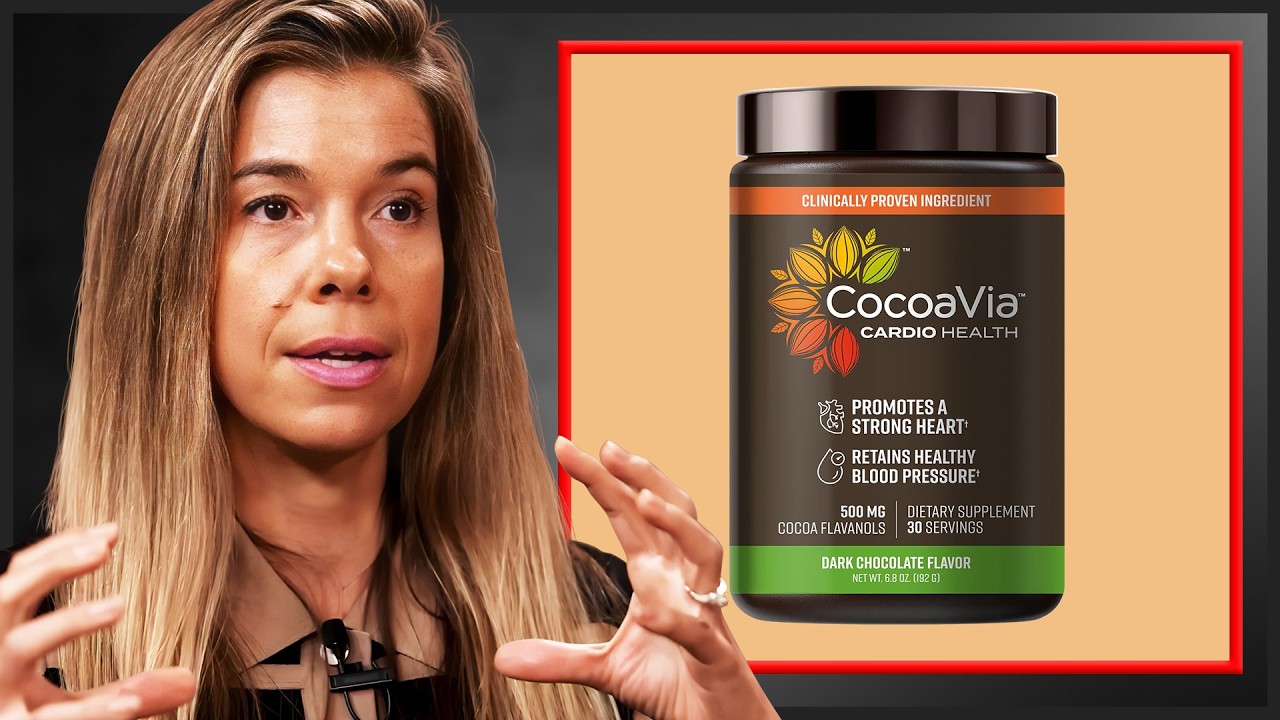
So basically, the bottom line, that was sort of a long-winded answer, but, you know, I think that it's likely there that antibodies will protect from reinfection based on the non-human primate studies. How long that protection will last is unknown. And that still needs to be determined, but it does seem very, very promising in general. Okay. So Jessica is asking, you mentioned earlier in a Q&A that you take CocoVia as a supplement. I'm unfamiliar with this supplement. What are its benefits? So CocoVia has cocoa flavanols in it, and one of these is the EGCG. It's found in very high concentrations actually in chocolate. And it's been shown in studies to enhance blood circulation, improve cognition, and actually even reduce wrinkles in human studies. So let's start with circulation.
So there was a study with elderly patients that had peripheral artery disease. And those who drank a beverage that had flavanol-rich cocoa in it 3 times a day 6 months were able to walk 46 yards further in a 6-minute walking test compared to those that drank the placebo beverage. And so it was shown that the improvement in their walking ability was a consequence to increased blood flow in their calves and also improved muscle function. So that was a super interesting study. There was another study that was actually done in young healthy males that showed that dark chocolate improved their, their cycling. So basically those that had dark chocolate were able to cycle 17% farther in the same amount of time than those that had the placebo control, which was white chocolate.
And the study also showed that they basically didn't need to consume as much oxygen to, to basically cycle farther as well. There was another randomized double-blinded crossover study in young healthy people that consumed various doses of these cocoa flavanols ranging from 0 to 80 milligrams, or sorry, 800 milligrams of these cocoa flavanols per day for 1 week, and circulation and blood pressure was measured. And so there was a dose-dependent increase in circulation. Um, effects were seen as little as— with a dose as little as 80 milligrams per day for 1 week, and the 800 milligram per day showed the best improvement in terms of circulate— improved circulation. Uh, the cocoa also decreased systolic blood pressure by about 5 points and diastolic blood pressure by about 3 points.
So, so basically a person whose blood pressure was 140 over 90 went down to 135 over 87. So those were the 3 studies that were involving blood circulation. Cognition, there's also been some studies with cognition. So, and of course, the improved, you know, increased and improved blood flow also means improved blood flow to the brain. Cardiovascular health is very, very tightly correlated with cognitive function and cognitive health in general. So one study showed that a single dose of 450 milligrams of these cocoa flavanols has been shown to increase blood flow to the brain as measured by MRI imaging. So one of the areas of the brain that gets increased blood flow is the dentate gyrus region, which is part of the hippocampus associated with memory.
And increased blood circulation translates to protection from cognitive decline. Another study found that elderly patients with mild cognitive impairment that were using up to 990 milligrams of these cocoa flavanols per day for 8 weeks saw improvement in their verbal fluency and their mental tests compared to the placebo controls. So they also had improvements in their— they saw a decrease in insulin resistance and a decrease in blood pressure as well as a decrease in lipid peroxidation. So, there were metabolic improvements that also corresponded with the improvements in cognitive function. And last but not least, the skin.
There have been— there has at least been one study that has shown that in a randomized double-blinded placebo-controlled trial in Korean women, that, uh, age ranges from their 40s to 80s that took 320 milligrams of cocoa flavanols per day for 24 weeks. They had an improvement in their, their facial skin wrinkles and skin elasticity compared to placebo group. Um, so, so I, I typically, I think, take around the 375 milligrams of the cocoa flavanols. The reason I use CocoaVia is because, um, I've looked at some third-party testing. For example, ConsumerLab has done pretty extensive testing on a lot of the cocoa. They've done like chocolate bars, they've done the cocoa supplements, and they've also done like the cocoa powders as well.
And they've looked for a variety of factors including contamination from cadmium and arsenic, lead. These things are a major problem with chocolates, cocoas, and things like that. And they also looked at the actual concentration of the cocoa flavanols. So there was— so there's a ratio, you know, you want to— you want a product that's high in the cocoa flavanols but low in the contaminants. And CocoaVia was the absolute best in terms of lowest contaminants and very concentrated flavanols. And in fact, the CocoaVia itself was used in several of the randomized controlled trials that I just mentioned. So I give it to my mom. I also take it. And but one thing to consider is that it does, because it is chocolate, it does have a moderate amount of caffeine.
So it's something to take in the morning and not with, you know, not with your dinner, because you don't want to take caffeine at night and, you know, you don't want it to disrupt your sleep. In fact, I've got, got my brand of CocoaVia right here on my desk. So typically, this is what I take. They also have an unsweetened packet that you can make like cocoa with if you want to add things like monk fruit or stevia to it. By the way, I have no affiliation with CocoaVia at all. I just happen to have done a lot of research on their brand and I like it. Okay. So the next question is from Laura. And Laura asks, the supplements recommended for people with migraines are magnesium, CoQ10, Vitamin B2. Is there any merit to this?
Has research shown people with severe or chronic migraines do better, or is there anything else to take? So this was a very interesting question to look into because my mom is sometimes— she has suffered over the years from migraines. They've gotten— they have improved enormously over the past 3 to 4 years, I would say. And she's been taking a variety of supplements that I help her with. And so looking into a few more of these helped me sort of determine what else to try with her as well. So migraines are really— they're hard to treat. And the most current theory for the cause of migraines is there's a spreading of decreased neuron activity throughout the brain. Probably lots and lots of different mechanisms at play, lots of things going on. But let's first talk about magnesium.
Intravenous magnesium has been shown to help in a handful of studies in terms of reducing symptoms of migraine in people who actively have migraine. There's also studies that show that really, there's no better effect than placebo. But I think we can talk a little bit about some of these specifics. But the common trend does tend to be that magnesium seems to be more effective for certain types of migraines. They're more effective in migraines that have an aura. It's also, I guess, called a classic migraine. Classic migraine. People that have a recurring headache that strikes after some kind of sensory disturbance. And that could be like a flash of light, blind spots, vision changes, tingling in your hand or face. So magnesium seems to help specifically with that type of migraine.
There have been a few IV studies, which I mean, it's only so relevant because you're not going to be, you know, An IV, it means, it sort of suggests you need to go get treatment from a medical healthcare practitioner. And that's definitely a lot more challenging. People are sort of looking for things they can do at home. But just to mention, there have been studies showing that many patients, for example, 80% of patients treating with 1 gram of intravenous magnesium recovered within 15 minutes of infusion. So they can have pretty robust and profound effects immediately. Another study showed similarly that 1 gram of intravenous magnesium could relieve pain in about 87% of the patients within 30 minutes of administration.
Another study showed something similar in 50% of patients administered intravenous magnesium. It's thought that the effects of magnesium may affect vascular tone in the brain, and this sort of helps reduce the spread of the decreased neuron activity in the brain. At least that's been shown in rats. There are epidemiological studies showing that people that are deficient in magnesium are more likely to have migraines. Not that surprising. Anywhere between 40 to 50% of the US population has an inadequate magnesium intake. So you're already looking at like half the US population doesn't eat enough magnesium or taken enough magne— dietary magnesium from their foods. Magnesium is found at the center of chlorophyll. Chlorophyll is the molecule that gives plants, uh, their, their green color.
So dark leafy greens are very high in magnesium, um, and, and many people are not eating enough of their dark leafy greens. Um, so let's talk a little bit about the, the oral magnesium because I think that's, that's, uh, certainly relevant in terms of people being able to, you know, you know, possibly take magnesium at home. There was one study that looked at migraines that were associated with menstruation. And they found that— that study found that around 360 milligrams of oral magnesium was able to significantly decrease the frequency of migraines. However, placebo control group showed the same. So it seems as though that effect That study in particular was probably due to the placebo effect.
There were 2 studies that people took a much higher dose of magnesium, so 600 milligrams of magnesium per day for 12 weeks. It seemed to have a real— show a real improvement in decreasing the duration and also frequency of migraines. with or without that aura that I talked about. And the average number of migraines decreased from 3 per month to about 2 per month. In addition, they tracked blood magnesium levels throughout the study, and there was an inverse relationship, so between initial baseline serum magnesium and the migraine frequency. So the lower the magnesium at baseline, the higher the frequency. of migraines, and that seemed to change with magnesium supplement— supplementation.
By the way, plasma magnesium— in order for someone to actually be deficient in their plasma, they have to be severely deficient in magnesium. The reason for that is because magnesium is, uh, it's mostly stored— it's stored in your bones and, uh, to some extent in muscle tissue as well. And because magnesium is so incredibly important, um, Anytime magnesium is running low, your body will pull it out from the bones. And so, your plasma levels are most of the time maintained within a normal range. So, a better indicator of magnesium status would be red blood cells. And that's even— there's, to some degree, there's some— that's only so accurate.
So, it's definitely difficult to assess magnesium deficiency from a blood test unless a person is severely deficient, particularly if you're measuring magnesium in the plasma. But that was a little tangent. Back to the migraines. So, I mentioned that study was 600 milligrams. That was very effective in terms of reducing frequency and duration of migraines. Another study showed that a smaller dose, 243 milligrams a day, had really no effect in terms of decreasing frequency or duration. So it seems as though the studies that have a positive effect with oral supplementation are at a dose of at least 600 milligrams a day. And so, you know, it's certainly not a magic bullet, but it could be beneficial to some people that really do have a problem with migraines.
And the one thing to consider with magnesium is that it can affect the gut and people do have some— can experience irritation in their gut and a laxative effect. So that's definitely something to be aware of. Uh-huh. It does seem— it does seem promising and I, you know, I haven't seen any toxicity studies of people taking magnesium, 600 milligrams of magnesium a day, particularly since again, people— most people are not getting enough from their diet. So, that was a— that was an area that I found illuminating to read about. Let's move on to CoQ10. Coenzyme Q10, you can find supplements in the form, in the oxidized form of ubiquinol and in the reduced form of ubiquinone, and in the reduced form of ubiquinol. Ubiquinol is much more bioavailable.
It's also much more expensive to buy, but it's really a better version to take orally because it is 3 to 4 times more bioavailable. There have been double-blinded randomized placebo-controlled studies looking at 300 milligrams of ubiquinol per day for 3 months, which seemed to be better than placebo in terms of attack frequency and days with headaches and nausea. And 48% of people actually that were taking the CoQ10 reported a decrease in frequency of migraines by at least 50%, whereas only 14% of the placebo group did report a decrease in frequency.
Another study found that CoQ10 along with vitamin riboflavin, or riboflavin, vitamin B2, also along with magnesium for 3 months prevented migraines Again, that's sort of a— you're getting multiple compounds there, so it's hard to say that it was one over the other. But it does seem that both magnesium and ubiquinol, at least in some studies, have shown to have a positive effect on migraine frequency, duration. Some other non-pharmacologic therapies have also been studied. Exercise, actually exercising for 40 minutes, 3 times a week has been shown to modestly decrease the frequency of migraines. I'd say, like, at least in, like, for example, my mother's case, it's difficult to get her to exercise. I'm working on this. The sauna is something that's a lot more doable in her case.
And, in fact, saunas, interestingly, have been shown to be useful for treating tension headaches, but I have not seen them studied in terms of migraine headaches. And what's interesting is that, you know, saunas do mimic moderate-intensity aerobic activity. That's been shown in one study that directly compared a 20-minute sauna session to a 20-minute cycling session on a stationary bike. And the parameters that were measured were heart rate and blood pressure both during the activity. And both sauna and the cycling increased the heart rate, increased blood pressure during the activity. And both of them led to a decrease in both blood pressure and resting heart rate after the activity compared to baseline blood pressure and baseline resting heart rate.
So it's interesting to think, you know, whether or not sauna, because it has been shown to help with— to help improve tension headaches specifically, I wonder if that's sort of connected to its effects on mimicking moderate aerobic activity. There was also another study, and I know this is sort of an emerging field as well, looking at the ability of exogenous ketones and, in fact, possibly just even looking at nutritional ketosis in general and the effects on preventing migraines. So there was one study that showed in obese individuals that were given a low-calorie diet along with exogenous ketones versus a low-calorie diet with no exogenous ketones.
The group with the exogenous ketones had 3.7 fewer days of migraines per month compared to the group without the exogenous ketones, and they also had about 74% of the the group that had the exogenous ketones said that their symptoms were improved by at least 50% compared to the group that were not given the ketones. They only had— only 9% of them said they felt improvements. So that also seems to be an interesting area, the effect of nutritional ketosis on headaches. And ketone bodies, and I know specifically beta-hydroxybutyrate, is an energetically favorable source of, um, source of energy for mitochondria.
Um, it requires less energy to utilize beta-hydroxybutyrate, uh, and convert it into ATP as compared to, for example, glucose that needs to be then converted into pyruvate, which then has to be imported into the mitochondria. And this is a very energy-consuming process to, to generate energy from that. Um, it's also very well known that many. So this, this was a theory first proposed, uh, by an acquaintance of mine, Dr. George Brooks, who I interviewed on my podcast many, many years ago. And we have some— I believe we have some clips on the clip channel, and, um, and we also just have an interview. You can go back and listen to that interview.
It's a really good interview where, where, um, you know, it was observed that In the brain, you have neurons in the brain, but you also have astrocytes, glial cells. And astrocytes actually outnumber the neurons. But astrocytes are predominantly glycolytic, meaning they use glucose for energy. And they use glucose for energy without using mitochondria. They are using glucose in a manner similar to how your red blood cells, for example, use glucose or how many white blood cells Um, you know, muscle tissue when you're, when you're doing high-intensity exercise. So they're making glucose, and I mean, they're using glucose for energy, and as a byproduct, they're generating lactate.
And lactate is a short-chain fatty acid, and it works very, very similar to, uh, beta-hydroxybutyrate in that it's a very energetically favorable source of energy. And it's been shown that neurons take up the lactate generated from these astrocytes. And the reason they do that is because it's easy for the neurons to use it for energy. And so, there's this lactate shuttle theory where basically, you know, the lactate you're generating, for example, through exercise also crosses the blood-brain barrier. This has actually been shown. It's no longer a theory, but it's been shown to cross the blood-brain barrier and be used by certain brain regions. By neurons in certain brain regions. So the benefit of that is sort of twofold.
In addition to being an energetically favorable source of energy, also it allows glucose— instead of glucose being used by neurons for energy, the glucose can be used by neurons to make what's called NADPH. The glucose is shunted into the pentose phosphate pathway. And— and the reason that's important without getting into all the complicated biochemistry is because it generates an intermediate compound called NADPH, um, that— NADPH that basically is used to make glutathione. And glutathione is one of the major antioxidant systems in the brain and is— it's important for— for reducing oxidative damage which can you know, affect a lot of things including migraines. So I mean, that's just, that's just one sort of interesting possible mechanism with the ketone bodies and nutritional ketosis.
But in general, I kind of just wanted to mention the lactate as well because the exercise link. And I see that Kevin Patrick linked to the George Brooks interview in the, in the chat. Zoe's asking in the chat, what type or brand of magnesium would you recommend for a migraine? Again, this is not medical advice, so I'm not recommending anything that you shouldn't— you should always discuss this with your primary care physician. I personally like Pure Encapsulations brand, and I like Thorne brand. I do not have any affiliations with those brands. I just have had looked at third-party validations. I've also had scientists that have validated some of their work. Sorry, some of their supplements by HPLC, and so I just find them a reliable source.
I like magnesium glycinate, but magnesium malate citrate are also good. I tend to avoid the the magnesium. oxide. But, um, you know, so, so those are the, those are the forms that I, that I typically like, uh, and that's— those are the brands. And I think that someone— there's a rapid-fire question I'm going to answer, uh, a little bit later towards the end of this, this Q&A that has to do with supplement brands. Um, so, um, we will get back to that. L is mentioning in the chat, how do the benefits of magnesium threonate compare to other forms of magnesium? Also, is there any benefit to Magnatene versus other non-patented versions? So I did, I covered this question about magnesium 3 and 8, I believe, in Crowdcast, either in Crowdcast 8 or 9.
If you, you can go, you can find the Crowdcast on your dashboard, foundmyfitness.com. There's links there to the previous Q&As. There's all the YouTube links. There's also in your private podcast feed, you can look at the— there's timelines. We usually have timelines on there and you can find where I discuss that in more detail. But just sort of a very topical overview, magnesium threonate was shown in animal studies to cross the blood-brain barrier more readily or easier than other forms of magnesium. The mechanism for that, it's almost impossible to find. For whatever reason, that hasn't been interrogated in detail. The people that patented this magnesium L-threonate, the researchers that did that are the ones that are mostly researching this topic.
There was one Randomized controlled trial that was published a few years— a couple of years after that animal study that showed magnesium threonate could improve cognitive function. However, when you read the study in detail, you find, um, there was a little bit of manipulation of data to get statistical significance. So, um, you had to pool together— looking at all the cognitive tests that were done alone, you know, there was no effect. Yeah. But when you pulled all of them together, there was a minor improvement. So, I'm not sure that magnesium threonate at this point, at least according to the data, published data, has robustly been shown to be more beneficial than other forms of magnesium, at least with respect to the brain. But that doesn't mean that it isn't.
It just means that we don't have convincing data yet. In my opinion. So I'm going to move on to some. Moringa questions. So the next question was from Yuko, and Yuko asks, you mentioned that you are taking moringa powder as well as prostaglandin. Is there a reason to take both, or can I just take moringa instead of broccoli sprouts or a broccoli sprout supplement? Also, how much moringa powder do I need to take to see the benefits? So this, and I believe there's some probably very, there's another related question to this, which we'll talk about in a minute. So here's my very unscientific answer to that because the Moringa field has not been as extensively studied as the sulforaphane field. Yeah.
Who I consider the world's expert on sulforaphane, Dr. Jed Fahey, who is actually a good friend of mine. And, at some point, I promise we are going to do a round 2 interview podcast with him because there are hundreds of questions that people have that he can answer much better than I can. But, with that said, through conversations with him, And through some just, you know, preliminary studies, it seems as though there's a lot of overlap between moringa and sulforaphane. And so, so, so that's, that's the reason that I'm, I'm taking the moringa powder. It is, it is cheaper and it's a lot easier than growing sprouts. So Yeah. It's something that I just have added. I've just added to, to my diet. I put it— I probably put a lot more or use a lot more than is necessary.
I mean, I'm putting like 1 to 2 really big tablespoons in a smoothie that feeds both me and my husband. So the smoothie, you know, it's a, it's a very large serving. So, you know, for a single serving, let's say you were going to put it in some water or something, then you probably would, you know, just even a level— what I would personally probably do is just a leveled tablespoon. And in fact, I think that's even twice as much as you can find on the Chemo Protection Center website. By the way, any questions on sulforaphane or moringa, Definitely check out the Chemo Protection Center's website. You can just Google Chemo Protection Center and you'll find you'll find the website. It's chemoprotectioncenter.org.
And so so they have a lot of they have a lot of facts on on that listed on that website. I don't know that it's necessary to take moringa along with prostafane. I just happen to. Take both of them because I'm a little obsessed and I really like the prostaglandin as well. Perhaps sometime in the future I will consider that I don't need both, but right now I'm still, I'm still doing, I'm still taking the prostaglandin. Now sometimes I forget to do one or the other. I usually do the prostaglandin, I usually do the prostaglandin at dinner, so after I eat dinner, and then I do the moringa in my, in my morning smoothie. So I think I'll move on to the related questions, which are from Scott.
And Scott was also mentioning from the Chemo Protection Center website that they recommend half a teaspoon of moringa powder. And I, by the way, I use the Kulikuli moringa powder. I don't have an affiliation with them, but there's been validation from, I believe there's been publications showing that their moringa is bioavailable and what's in there is actually— what they say is in there is actually in there. So it's a reliable source of moringa. And so again, a single serving, half a tablespoon, I typically do— sorry, they're saying half a teaspoon. I typically do it— if I was putting it in water, I'd probably just do a tablespoon. So, you know, it seems as though maybe you could titrate down if you would like.
The question from Scott also is asking about cold brew tea to improve the taste. So the question is, are there other things that you could add to it that would inhibit the activity, some of the enzymes that are important and The question— the answer, the short answer is I don't know for sure. I know that with sulforaphane, too much of an acidic— raising the acidity too much can sort of inhibit the enzyme myrosinase. So perhaps it would be best to stick to something like mint or stevia, but I don't know that those things have directly been tested. Perhaps there's some mechanism that is unknown, but it— I would say it's, it's unlikely. Um, probably stevia would help improve the taste. It definitely doesn't taste good. If you're doing a shot of it real quick, you know, it's, it's over with.
In the smoothie where I, I put it, it, uh, you know, makes the smoothie doesn't taste quite as good as it would without, without the moringa for sure. Aaron's saying, by the way, kuli kuli moringa powder is cheaper on Amazon than at Whole Foods. Cool, thanks. I've been buying mine on Amazon, so good to know I was getting the best. Um, I think I did buy it from Whole Foods a couple of times, but then this pandemic happened and I couldn't, I couldn't, uh, get any orders from, from Whole Foods anymore. Ryan's asking in the chat, any thoughts about the research showing vitamin C as a pro-oxidant? Ryan, if you have not checked out our topic page, 28 pages and 190 references on vitamin C, foundmyfitness.com/topics/vitamin-c.
Best way to get there would just go to foundmyfitness.com and click on the topics page, the topics on the— in the navigation bar, and scroll down to vitamin C and click on that. We do discuss the pro-oxidant effects of vitamin C, and those are mostly attributed to extreme vitamin C where you over— Yeah. You overcome the saturatable mechanisms that you basically— that are in place in order to take— in order to raise plasma levels of vitamin C. You can only raise them to about 220 micromolar if you're taking an oral vitamin C supplement, whereas if you do intravenous, you can basically override that and you can increase your plasma levels between 30 to 70 times higher.
Depending on the dose, and the effects of of the vitamin C actually are you know because your your vitamin C is the dehydroascorbic acid form DHA dehydroascorbic acid as opposed to ascorbic acid, which is the reduced form. The by the way, there every vitamin C molecule, every ascorbic acid molecule. Undergoes about 4 cycles of oxidation reduction. So for example, you have an ascorbic acid molecule that is doing its antioxidant activity effect because there's some oxidant that was, that was generated. So it reduces that oxidant and then it itself becomes oxidized. It becomes reduced again, does it again. It becomes reduced again, does it again. So that happens 4 times. Before that, so that's pretty much the the the end of the antioxidant activity of ascorbic acid.
The ox the the interesting thing about the dehydroascorbic acid when you're when you're when you're injecting it intravenously at very large concentrations is that it actually forms hydrogen peroxide, and the hydrogen peroxide. Kills viruses, it kills cancer cells, and this has been shown if you read the whole cancer section. There's been multiple studies now investigating intravenous vitamin C as an adjunct treatment to standard of care, whether that's chemotherapy or radiation, and it's been shown to be beneficial in terms of killing cancer cells and also beneficial in terms of improving patient Yeah. The quality of life. And so many more studies are actually ongoing with the cancer.
The same effects, killing effects, happen with viruses, and this has been shown in a variety of different human studies, not with influenza virus or a coronavirus, but other types of viruses that people have had. Interestingly, the neutrophils, one of your types of immune cells, also produce hydrogen peroxide, and that's how they end up killing things like pathogens like viruses or bacteria. What's also really good to know is that there's been clinical studies investigating whether or not the hydrogen peroxide produced from a high-dose intravenous bolus, so people that are getting a high-dose intravenous vitamin C, it's been shown that their cells are not affected. So the immune cells themselves are not getting damaged. In fact, the vitamin C is acting as an antioxidant protecting them.
And that's part of also why vitamin C is beneficial or has been shown to be beneficial in those contexts because the neutrophils and other immune cells that are producing these oxidants like hydrogen peroxide or hypochlorite they themselves can become damaged and it sort of, that affects their immune function. And so the intravenous vitamin C has been shown that it basically does not affect normal cells, but does seem to kill, specifically kill pathogens as well as cancer cells. So I think it's a good idea if people are interested in that to go ahead and look at the topic page. Again, that's foundmyfitness.com, click on the topics in the navigation bar and you'll find the vitamin C topic page. I'm also doing a podcast on this.
I'll be recording an audio podcast giving a lot of commentary in addition to the facts very soon, within the next 2 weeks. So basically we will be covering that in detail. Brian's asking about the highest voted question in this this specific Q&A? Do I answer the highest voted questions, or do I cover questions that are not, you know, how, what's the selection process for this? And so basically, yes, I typically look at both the highest voted question. And if it's something that's been answered before, I tend to put that as a lower priority because I don't want to keep being repetitive. I try to answer questions that have not been addressed, but that will also be interesting. as well.
In terms of the way this was organized, the way I'm going through this right now, the top-voted question was not actually the top-voted question at the time of organizing everything. So, and also sometimes questions that require a very, very deep dive into the scientific literature, I basically make note and my team and I look into it and then we'll address it at a later Crowdcast, because we want to be as, as you know, comprehensive as possible. So another question, and I forgot who I didn't for some reason I didn't have the the the specific of the question got deleted, and I just now have likes with the topic. But someone was asking about. Uh-huh.
Talking about the specifics of the effects of the sauna and heat stress and also on the immunity and also adding in some, some of the, some effects of cold and whether or not if you were to go from a sauna or a hot bath into a cold shower or, you know, an ice bath or some sort of cold shocking, you know, effects on the immune— what the effects on the immune system are. And I did cover the effects of sauna. Uh, on, on heat stress in the COVID-19 Q&A. We also have a clip that you can find on the episodes page, the COVID-19 episodes page, um, uh, on foundmyfitness.com. If you click on the episodes page, you'll look at the timeline. You'll see you can click on the timeline and it'll take you right to the time point where I talk about sauna and immunity.
But generally speaking, without going into too much of detail because I don't want to be too repetitive, um, Heat stress in general increases heat shock proteins. And heat shock proteins, this has been shown in humans, the humans that are, that have done the sauna or also you in a hot bath, you can increase your heat shock proteins and by up to 50% more than, more than your baseline levels. Heat shock proteins themselves directly, they directly regulate the innate immune system. also the adaptive immune system as well. But, um, and so the innate immune system, that's, that's the part of the immune system that's involved in fighting off a pathogen that your, your body has not seen before, for example.
So, uh, something that you don't necessarily have adaptive immunity to, something that you haven't already, you know, been exposed to. Um, so this is sort of the, the, the, the broad just attack and fire away as opposed to the the, the anti— you know, the antibodies, the adaptive immunity and antibodies that can be made to specifically target, um, pathogens. So, um, there have been human studies that have looked at, um, you know, people that have, that have used the sauna and how they have an increase in, uh, immune cell numbers as well, a variety of different innate and adaptive immune cells. So, um, and then there's lots of, um, You know, there's observational studies linking sauna use to lower, for example, lower pneumonia risk, up to 40% lower pneumonia risk.
And also, there've been some preliminary studies looking at people using the sauna and the common cold. It seemed to lower the duration of the common cold. However, people had to use the sauna for at least 3 months before that effect took place. The, the, what I've personally been doing is I've been using the sauna 5 times, pretty much 5 times a week, 4 to 5 times, at the least 4. And after I use the sauna, I take a cold shower. And I've been doing this ever since the shelter-in-place took place. So I've been doing pretty much all my showers now, actually 100% of my showers are cold. And How long do you stay in the cold shower? I would say I stay in the cold shower for around 6 minutes. And it's funny because initially when I was doing this, it was hard, really hard.
And, and then you adapt. And it's just, it's really amazing, the effect on my mood. But let's talk a little bit about the cold and immunity because that's also a very interesting area of research where cold exposure has been shown to boost immune, the immune system, and also increase the, the number of immune cells. So in one study, a very small study, healthy men on 4 separate occasions sat in a climatic chamber for 2 hours. So this was about 41 degrees Fahrenheit, and their core body temperature did fall. And as their core body temperature fell, this led to a mobilization of circulating natural killer T cells. And also it increased some of the, you know, cytokines involved in killing pathogens.
Interestingly, habitual winter swimmers, they have higher numbers of white blood cells compared to the non-habitual winter swimmers. There was a study that showed that long-term cold water immersion, so 57 degrees Fahrenheit for 1 hour, 3 times a week, in healthy males, that was shown to basically increase lymphocyte numbers, and it also translated to fewer, fewer colds. There's epidemiological studies that have, that have associated, again, winter swimming— people that engage in winter swimming have around 40% fewer respiratory tract infections. Again, that's, that's a completely associative study. There could be a million possibility— possible confounding factors.
But the important thing is, is that there are intervention trials showing that, yes, if you put a person in cold water for X amount of time, it does increase their, their, you know, white blood cell number. And it does also, if you follow those people, they seem to have fewer colds. So, so there is, you know, there is some causal effect being, being you know, investigated as well. So I find all that stuff really interesting. You know, it's not like a huge area of research. There's not like tons and tons of studies, you know, looking into that. But there are a few, and the few that have done so seem to show a positive effect on cold stressing the body in terms of how that translates to increasing white blood cell numbers and also various cytokines that are involved in killing pathogens.
Personally, I want to see more research in this area. I absolutely love doing the hot sauna and then taking a cold shower after. Eventually, I would like to get an ice bath. For right now, people that don't have a sauna at home and because, you know, We're still in this very delicate time where gyms are closed and stuff, and public saunas are not—they're not safe to use yet. Hot baths are also have been shown to increase heat shock proteins, and I'll tell you, you know, I have for years and years and years I have talked about the sauna. You know, I've done a lot of reading literature review. I've played a huge role in popularizing them for health. reasons other than sweating out toxins. And I have not had a home sauna until, until March of 2020.
For many years, I either used the gym sauna or I did hot baths. For many, many years, I used hot baths. So I, as much as anyone, understand the frustration of not having access to a sauna. But I still, you know, was able to achieve heat stress benefits through using something like a hot bath. As well, and Kyle's asking me to pronounce sauna correctly. Sauna—that's how they say it in Finland. Sauna. I'm American. What what can I say? There's a there's a relevant question. to the sauna, and this was from Nikki, and it has to do— Nikki asks, I was hoping you could clear up some confusion about the differences between traditional and infrared saunas.
I'm looking, looking to purchase a home sauna, and infrared seems to be the way to go in terms of cost, um, and, and things like the time it takes to heat up. I just want to make sure the benefits are the same no matter what type of sauna. Is my understanding that infrared sauna heats your body not just the air around you. So even though the air temp— temperature is lower than the traditional sauna, your body still reaches— your core body temperature still elevates. Uh, is there any— is there any reason to be concerned with EMF with infrared sauna? Thank you.
Um, so, um, I have— I have looked into, um, the differences between infrared saunas and traditional heating saunas or even Finnish saunas, which often use— they often put hot water— sorry, put water on hot rocks, which generates steam, and so it increases the humidity as well. And many, many of the published studies, particularly all the ones that I refer to, if you, if you go back and listen to any of my talks or podcasts, or Article on we have a topic page on the sauna. It's amazing. You should definitely check that out. It's just completely comprehensive. Most of the time, I'm referring to you know traditional saunas that are using a heater to heat the ambient air.
There is a there is a body of literature that uses infrared saunas and particularly looking at far infrared saunas and the effects on cardiovascular health. And this is called Waon therapy oftentimes. Um, it's, it's used a lot in Japan. And, um, the saunas get up to around 140 degrees Fahrenheit. So that's like the maximum heat, um, that you can get out of the infrared saunas. And so most of the time, most of the protocols are, are much longer. So there, there's like a 45-minute period of heating, um, a person's core body temperature as opposed to Uh-huh. For example, a 20-minute, you know, at a, at a much higher temperature like 174°F, for example. So I do think that infrared saunas can be used.
I think that, um, it takes a lot longer, so you have to sit in them a lot longer to, to, you know, elevate the core body temperature. But eventually you can, um, it— and it may be a lot longer than, than you think, uh, in, in, in some cases. So I don't think that infrared saunas are completely useless. I certainly think that some sauna is better than no sauna. I prefer the traditional saunas. I think that the literature really backs up that type of heat stress pretty robustly. And I think that it's also, personally, I like to be more efficient with my time. So I, you know, I just can't afford to sit in the sauna for over an hour. which I have done. I've used— my in-laws have an infrared sauna and I've used their sauna on many occasions.
And so I have to let— I have to let the sauna warm up for like an hour at least and then have to sit in it for over an hour to really sort of get to that, you know, elevation of core body temperature that I'm used to getting. But I do, I do understand. I do think that, you know, people, people can get benefits from them. And there's certainly a literature in the published literature to suggest that, at least in the case of WAM therapy. I don't think EMF is a problem. I talked about EMF in a previous Crowdcast. I believe it was maybe Crowdcast 8 or 9 where I did talk about EMF, and so I don't think it's a really big concern. So, uh, someone's answering— people are asking what kind of sauna I got. I got the Hallmark 44. I got mine from Nordic Sauna.
Um, Hallmark 44 is made by Finlayo, and, um, the reason I got that is for— is a couple-fold. One, um, that you can plug it into a regular outlet So you don't need like a handyman to come do all sorts of, you know, magical stuff to basically have one of these saunas. Also space-wise, it fits 2 people, but I mean, it's just, it's really nice to be able to just put it in a spare room if you don't have a lot of space. So that's why I went with that. And I really love it. I just can't emphasize enough the effects on mental health. And I'll be— we'll be talking about this more in detail pretty soon. And you guys have heard me talk about it a million times, so I'll spare you going into all the sauna details right now. But I think I'm going to move into— move on to the next question.
So, this question was from Alex, and Alex was asking about parathyroid hormone levels and optimal calcium levels. Uh, when they're elevated, they're associated with low energy, atherosclerosis, weak bones, and a bunch of other aging problems. What are the optimal levels for adults, and can high calcium levels be mitigated by vitamin K2 intake? Generally speaking, a normal reference range for blood calcium levels in adults is between 8.6 and— or sorry, total calcium levels is between 8.6 and 10.2 milligrams per deciliter. per deciliter. Um, optimal calcium levels really are individual-specific. They, you know, it depends on a lot of factors, and there are certain, uh, symptoms that can be correlated with a certain blood level, you know.
So, so some of the really high blood calcium levels can translate into things like kidney stones, gallstones, uh, bone abdominal pain, constipation. Or muscle weakness, depression, anxiety. I mean, just, just pretty much anything. So, um, any of those symptoms, you know, a doctor may measure blood calcium levels or parathyroid hormone levels. By the way, um, vitamin D is a major regulator of, um, dietary absorption of calcium. And so if you have optimal vitamin, vitamin D levels, if you're— or to flip the flip side of that, if you are vitamin D insufficient, which is less than 30 milligrams— 30 nanograms per milliliter, or deficient, which is 20 nanograms per milliliter or less, um, then you could— you're, you know, not optimally absorbing calcium from your diet.
So vitamin D sufficiency increases calcium absorption by 40%. Um, and so, uh, this is often why low levels of vitamin D also lead to active parathyroid hormone level in addition because the calcium levels are also being low— are also low. Um, so what parathyroid hormone does is basically when the calcium is low in the blood, uh, in order to increase it, um, basically parathyroid hormone is secreted and, uh, and this then releases calcium. Bones, you know, bones are a major you know, tissue that is storing calcium. And so calcium is released from bones and, you know, more calcium is reabsorbed from the kidney— in the kidneys and in the gut, etc. So, so basically when calcium is low, parathyroid hormone goes up, and when calcium is high, parathyroid goes down, generally speaking.
The vitamin K2 issue is It's a little bit of a hypothetical, theoretical, has-not-been-shown kind of thing where vitamin— so vitamin K has 2 forms, vitamin K1 and vitamin K2. And there's several different types of vitamin K2 or menaquinone as it's called. Vitamin K1 is phylloquinone. Uh-huh. The main source of vitamin K1 are dark leafy— dark leafy greens. Um, the main dietary source of vitamin K2 are fermented foods, and the highest, which would be fermented soybeans, or natto as it's called in Japan. You can also find a very modest amount in, uh, like fermented cheeses, for example. Um, but I would say that in general, Western diet is not like a huge, huge source of vitamin K2.
The main difference between vitamin K1 and vitamin K2 is the what's called tissue specificity, and what that means is where in the body it goes to do its its function. Vitamin K1 typically goes to the liver, and in the liver it's involved in it. Activating proteins that are involved in blood coagulation, and so blood clotting. And that's an extremely important function bodily function to prevent hemorrhaging, and which can can lead to death. Vitamin K2 does not predominantly go to the liver. Instead, it seems to be more peripheral and stays around in the periphery, in the in the in the bloodstream area, and it's involved in.
Activating proteins that are involved in, in, for example, mobilizing calcium, moving calcium, shuttling it from the bloodstream to other parts of the body where it's needed, like the bones and muscle tissue. So, so, so vitamin K2 activates some of those proteins that does that. Additionally, vitamin K1 once its functional role has been satisfied in the liver. So, once— if you're getting a very sufficient amount of vitamin K1 and your blood clotting proteins have all been activated, that process is occurring, vitamin K1 then stays around in the periphery and actually can serve the same function as vitamin K2. It can do the same thing. The problem is most people don't get enough vitamin K1.
And so, the vitamin K1 they do get preferentially goes to the liver because it's got to go do the blood clotting thing first. So there's this, there's this idea that's been sort of in the echo chamber that taking vitamin K2 will help you prevent getting buildup of calcium plaques in the vascular system. Calcium forms precipitates very easily, particularly in the presence of phosphorus, which is also, um, uh, absorbed, you know, and from the diet with, with calcium. And so, uh, you want, you want the calcium to be transported to other tissues and, and basically used by, by other tissues and other cells. Uh, you don't want it to sit around in your, in your bloodstream for, you know, too long. Uh, I, I think there is— there are actively some clinical studies actually trying to look at this.
But there's not, to my knowledge, published empirical data showing that actually is the case. So, so the so the idea would be okay if you take a vitamin K2 supplement, then you can you sort of as a insurance to prevent your your yourself from having calcium plaques build up. So personally, I do I do like taking I take vitamin K2. I take MK the MK4. form, and I take about 50 micrograms. I only take that a couple times a week, so I know it's not something I take on a daily basis, but I also get a lot of vitamin K1 from dark leafy greens. So the next question was from John, and it's kind of a strange— it's kind of a strange question, but I will read it. It says, fish consumption has been associated with cognitive impairment and loss of executive function. A post from Dr. Greger.
Fish has more TMAO than other protein. From, I guess, a quote from Peter Attia. Lectins in beans, seeds, and nuts are inflammatory. A quote from Gundry. Plant-based diets convert ALA into DHA and EPA. No need for supplementing. A quote from Dr. Tim Radack or Radack. I'm not sure how to pronounce that. And then John continues to say, I'm totally confused. And the more I read, the more confused I get. I agree. That was a very confusing— that was a very confusing statement. So let's, let's kind of start at the beginning of this statement. Fish consumption has been associated with cognitive impairment. Wrong. I mean, I don't know where one— if one cherry-picked study or one or two cherry-picked studies where that was from, what epidemiological study that was.
But I can tell you that the vast majority of what's called scientific consensus is that fish consumption epidemiology studies, meaning studies looking at dietary fish intake and cognitive improvement in both healthy young individuals, in people with cognitive impairment, people with mild cognitive dementia, and people with APOE4 who are at high risk for Alzheimer's disease. In every case, fish consumption is associated with improved cognition. It's associated with improved structural— according to MRI, structural integrity of the brain, improved biomarkers and tau tangles in the brain. Fish consumption in the form of randomized controlled trials, dietary studies that have been done, and also fish oil consumption have been shown to improve cognition.
And pregnant mothers that have taken it have— it's been shown to lead to improved cognition in offspring. I mean, it's just overwhelming evidence. So I would say that statement, I mean, that one particular statement right there is like, it's mind-blowing that anyone would actually feel bold enough to be able to make that statement with all of the evidence showing the opposite. I mean, I just, I wish John would have posted a link to whatever study backed up that statement because I couldn't find one. And so I will just tell you that, that was basically, it was just the most inaccurate thing I've ever heard, basically. The rest of that statement, so the TMAO and fish, so the TMAO topic is a very, it's a very complex topic.
And so many studies have shown that fish consumption improves cardiovascular health. That even you know high dose fish oil does improve, and randomized controlled trials improves cognitive sorry cardiovascular health. And so there's a very complicated, very nuanced component to TMAO that has to do with gut microbiome composition that it's not even completely understood. I think that I think people that want to cherry pick and say that plant based diets are the best diets to eat, um, are, are basically, uh, that are basically, um, for whatever reason, they're just that they're, they're, they're wanting to be biased. And so, so they basically, you know, use TMAO.
But again, I think it's a very nuanced topic that has to do with gut microbiome composition that's been shown, um, that I'm still waiting for more data to understand. And, um, I just, you know, I just don't I don't feel like arguing a topic that is lacking data. That's my feeling. Bill Harris commented that the literature does not support the hypothesis that DHA improves cognition. I would disagree with that. And in fact, my last publication refers to many randomized controlled trials even where DHA improved cognition. So, and not only did it improve cognition, it improved biomarkers in the brain in terms of functional biomarkers in the brain. So, and by the way, I will be— me and my team will be doing an omega-3 topic page.
It's— I mean, if you saw the The vitamin C topic page, you know, 28 pages and 190 references. It is it is a huge amount of work. We spent so many weeks. I mean, just like two months doing that research. Omega three is even even more of a of a bite to take. And so so we're sort of slowly slowly chugging away at that. But we will have an article, an omega three article, and it will cover all of these all of these things. DHA, the effects on the brain. Differences in protocols. Oftentimes, the differences in protocols are what what can explain the conflicting studies. For example, you know, and also genetic background. So so if you have a study in people with ApoE ApoE four and they were giving DHA dose of less than I believe it was less than two grams, then there was no effect.
So there there are there are a lot of different things to consider with the, the design of a protocol, of a randomized controlled trial protocol, um, and that can even explain the conflicting studies. Um, even things as complicated as the ratio of EPA to DHA sometimes seems to throw things off as well. Just a lot of nuance. And I think that if you just re— if you just are taking, you know, in some cases Even meta-analyses do this where they just sort of analyze what the results say and they don't address the specific trial design. And so you'll get a meta-analysis that has a conclusion, but it's— now you have to look at the protocol and you have to look at all these things to sort of get to the bottom of that. Uh-huh.
The— just the rest of this question, I wanna keep going before this, um, this ends. The lectins thing, uh, again, that is something, and I've talked about this in many other Crowdcasts before, where there is just— the only clinical evidence of this I've seen was some kind of paper written by Gundry, and it was like a case study based off— or not even, it wasn't even— it was like an anecdotal study or something. Or some sort of very anecdotal type of data. This is all stemming from the fact that lectins, which are actually found everywhere in nature, basically can stimulate an immune response in vitro in cultured cells, which is often the case of, you know, the stuff that's cited.
Possibly I can see maybe someone that has a gut issue already, pre-existing gut issue, maybe they would be more sensitive to beans. um, that, uh, that weren't cooked well or something that, that, you know, I think there could be a certain, uh, argument to be made for someone that has a severe gut issue. They may be more sensitive to something like, like lectins. But, uh, I don't think you can make a broad, a broad statement that everyone should avoid, avoid beans and, um, and certainly not nuts and seeds, which have been shown to be beneficial for gut, gut health, cognitive health. cardiovascular health. Plant-based diets, ALA converting enough in DHA and EPA, no need to supplement.
I, you know, the conversion of alpha-linolenic acid into both DHA and EPA is very dependent on a variety of factors including genetics. Many people are not efficient at converting ALA into DHA and EPA. Estrogen does help with that, and I think the reason for that is because DHA is so important for brain development that the body has come up with a way for women to— and because during pregnancy estrogen levels just go through the roof, I mean, they're just orders of magnitude higher than what they would otherwise be. And so estrogen itself, I forget the exact percentage, I believe anywhere between 20 to 40%, it can increase the conversion of ALA into DHA. EPA and DHA by a very significant amount.
But, you know, that's only relevant for, you know, women during certain cycles and certainly, thankfully, during pregnancy because during pregnancy is the time when you really want to get more DHA. And I would highly, highly advise women to take— to eat fish and even supplement with fish oil. There's been studies showing that it improves verbal fluency, it averts intelligent quotient score, it improves hippocampal— the hippocampal mass as well. Again, this will be an article that we will be covering at FoundMyFitness in the future to get into a lot more detail. Rapid-fire question. I'm going to do a couple of rapid-fire questions.
Janice asked, for ApoE4 carriers, you have proposed the brain's requirement for DHA can't be met solely by supplements as they don't cross the blood-brain barrier and food sources are necessary for people with ApoE4. Do you believe that No DHA is available by supplementation. So let me clarify the confusion for Janice and anyone else. Basically, my publication on phospholipid DHA, a specific type called lysophosphatidylcholine, which crosses the blood-brain barrier just like free fatty acid DHA does, but free fatty acid DHA requires basically more of an intact blood-brain barrier. Using passive transport, and the, the lysophosphatidylcholine goes through a— through MFSD2A transporter, which basically, you know, can bypass some of that defect.
Dietary sources of DHA that are higher in phospholipids like fish or fish roe, you know, have, have more of that phospholipid form. However, Fish oil supplements in triglyceride form also get converted into phospholipid DHA and lysophosphatidylcholine DHA. They just require a larger amount of it. And I do think that taking— I think that taking DHA in a gram amount of over 2, so 3 or more grams, is something that I would like to see tested. I personally think that, I mean, it absolutely does. Fish oil does get converted into phospholipid DHA. It just requires a larger amount. So it's one of the reasons why I take 3 grams of DHA. It's a fish oil supplement that's high in DHA, and it's from N-Pure 3, as you guys know. And I also take I've been adding a higher dose EPA as well.
So I— in my ideal situation, I'm actually taking 3 grams of each, but oftentimes I forget to take the, the EPA as well. So I'm trying to be better at adding that as well. The next question is from Laura. Laura says, will you continue to supplement with liposomal glutathione? On the Kevin Rose podcast, you mentioned that broccoli sprouts increase the production of glutathione in the brain, so I was wondering what your thoughts are on continuous supplementation. I'm not sure that I'm going to take— I do think that the best way to increase glutathione is, is through increasing the body's ability to produce glutathione because— and also the, the body increasing the body's ability to utilize glutathione, which is, which is what sulforaphane has been shown to do.
There's been clinical studies in humans showing that it increases in the brain, which is amazing. There's, there's really no clinical evidence that liposomal glutathione taken orally increases glutathione in the brain. We have no, we have no evidence of that in humans. I was taking it in the short term because of just sort of, it was part of my COVID-19 defense. where liposomal glutathione was shown to increase a variety of innate immune cell— the immune cells involved in the innate immune response. And, and also, so that was— and also it lowered markers of oxidative stress as well. So that was, that was sort of the reason. I'm not sure it's something I'm going to take, take indefinitely though. Another question was from John.
John says, started doing a keto vegan diet 1.5 years ago, lost 30 pounds, lowered my cholesterol, BMI, but I can't maintain my muscle volume. And John's asking about myostatin, if he stimulated his myostatin, and if there's anything that, you know, basically can, can change this. And What's interesting is that there was actually a recent study someone sent me where sulforaphane inhibited myostatin and increased muscle growth, at least in animals. So that's that's sort of interesting. Take a look at our creatine article on the topic page. There's there's some interesting effects of creatine monohydrate on muscle mass as well. James asks. When Dr. Sinclair said he was already working towards things better than NMN for creating NAD+, what do you think he means?
Basically, he was referring to— in the podcast that I did with Dr. David Sinclair, he was referring to pharmacological screens they do to identify other compounds that are able to increase NAD+, intracellular NAD+ levels. In cells. So that specifically just means there's other compounds that could potentially do that that they have identified. And another question, another rapid-fire question was from Steve. What SNPs are the most, most, most affect the response to COVID-19, and will you add them to the genetic report? So let me just give you guys an update. We will be releasing an incredibly updated genetic report. We have a new product development aspect to it where we're basically going to have a really awesome new product, which you guys will hear about really soon.
But in addition to that, we are gonna— we do have a new— we have added about 15 or 16 new SNPs that have to do with the viral response. Some of them have looked at the response to SARS-CoV-1, some of these receptors involved in, like ACE2, that are involved in uptake of the virus into cells, as well as looking at viral replication, looking at the immune response to viruses in general, and the immune response to specifically acute respiratory distress syndrome and things like that. So we do— that is coming. That will be in the next week or 2 at the latest. So really excited to share that with you guys very soon. And the last question I have time to address was from James, and it's another sort of rapid-fire question.
The question is, what possible treatments for COVID-19 will likely come around before a vaccine? Antivirals, antibody donations, or something that forces the virus to attack before it's already allowing the body to figure out before it's a real threat. I have high-risk parents and I'm worried more than 50% of the country will be infected before a vaccine is available. So my thoughts are, I think that, you know, some of these repurposed pharmaceuticals that are being studied, obviously being repurposed is important because safety is a big issue and having anything that's new, having to go through preclinical studies and clinical studies. I mean, that just takes too long.
So repurposing pharmaceuticals that have already been FDA approved and are safe is definitely the way to go for the, I think, the first line of defense. And I think probably the most promising treatment so far right now seems to be remdesivir, which initially was identified as a pharmacological screen that was done, and it was actually found to have antiviral activity against coronaviruses and some other viruses. It was developed in response to the Ebola outbreak, but initially the screen that was used was actually for coronaviruses.
There's been, you know, it was, you know, been studied before this SARS-CoV-2 outbreak It was shown that the remdesivir, if given to non-human primates, rhesus monkeys, if it was given 24 hours before being exposed to the MERS coronavirus, that they were protected from MERS basically. And that's because remdesivir binds to the RNA-dependent polymerase and basically stops the polymerase from replicating. Replicating. So the virus, it basically stops viral replication. And that's why it's really important to give anything that stops viral replication, it's important to give earlier in the disease rather than later when the virus has already replicated a lot and the immune system's already responded.
I would say the most recent data that was released by the NIH showed that basically It was that remdesivir could clear, or basically it could lead to clinical improvement quicker than placebo. So I guess it was, let's see, forgot. I think it was like a 30%, a 30% more rapid. Recovery. I think that in addition to— so obviously there's some drawbacks to that because it's, you know, it's intravenous administration, so it's not something people can just take at home, something that people have to go in to be treated with.
But it is good to know that there may be at least something that may lower the death rate, and which would lower the— you know, that there is something that may help lower the potential burden on the healthcare system, which if that Anything that can do that is a win situation for many reasons. In the meantime, I think that some of the leaders in what's called monoclonal antibodies, like Regeneron for one, they've already isolated antibodies from people with SARS-CoV-2. They've also isolated antibodies from mice that were humanized and infected with with human— with the SARS-CoV-2 virus. And so they're trying to develop monoclonal antibodies that can be used to neutralize the SARS-CoV-2 virus. Clinical studies, I think, are going to start within possibly even the next month.
And once the clinical studies show that these monoclonal antibodies are safe, they can then start to be used in some specific populations, perhaps people that are being exposed like healthcare workers and people that are more vulnerable. The drawback for that, of course, again, is production and how much of it can be produced to give more, you know, to have a more widespread use like something like a vaccine where you kind of can give it to everyone. But it may still also really help while vaccines are being developed. And I think that, you know, the monoclonal antibodies is the segue into then eventually a vaccine. And all in the meantime, I think these things will, you know, people will continue to be exposed and many people will recover.
And so the people that have a more severe form could then potentially be treated earlier with remdesivir, or even monoclonal antibodies may help early on. And so what you end up having is herd immunity does start to develop as more people do get exposed and recover. And at the same time, you have some therapeutics that are helping people with more severe forms. And all the while, vaccines are being developed. I think that's sort of my take in a very, very oversimplified explanation. You know, Kevin's mentioning convalescent plasma, and I think the convalescent sera is even more of a bottleneck.
I think that monoclonal antibodies isolated from these, from patients that have had SARS-CoV-2, and then producing these monoclonal antibodies on a larger scale is much more applicable than using convalescent sera. But I think that's it for this round. I've definitely— I need to wrap it up. And I will be doing a round 2 COVID-19 Q&A. I will be recording it likely next week. Yeah, so that'll be coming out very soon. You guys will get to hear more thoughts on some of the most common and frequent questions on COVID-19, and some of those actually have to do with some of the stuff we touched on today, like reinfection and other things like that. So thank you very much, everyone, for submitting the great questions and for attending live and chatting useful information.
I really learn a lot from these Crowdcasts. I enjoy them. I really hope you guys do as well. Um, we'll be posting the replay, uh, to the, the, the, you, the video YouTube replay, um, on, on your dashboard, FoundMyFitness dashboard. So again, that's foundmyfitness.com/dashboard. Um, you'll, you'll, there you will find the, the replay to this video, the timeline. You will also find, if you haven't already downloaded your private podcast feed, you should do so. That way you can automatically, when the, uh, when I release a new episode on the private podcast feed, You'll have it on your podcast feed, and the timelines are also posted there as well. I hope everyone has a great month, and I look forward to talking to you guys soon again. The genetic report update is coming so soon.
It's an interactive report where you're basically you're going to be able to, in addition to having a PDF, you're going to have a file that you can use, and it's searchable. It's categorized based on on categories like telomeres, longevity, ketosis. diabetes, cancer, cirrhosis, virus, things like that, cholesterol. So you'll be able to search through all your SNPs. And, and I'm really, really excited about this. So again, thank you everyone. I really enjoyed this Crowdcast, and I will talk to you guys next month.
Every month, Rhonda hosts a live chat with FoundMyFitness Premium Members.
Don't miss the next one.
Watch previously recorded Q&As with Dr. Rhonda Patrick
Q&A #83: Does Glucosamine Worsen Alzheimer’s Disease?
Dr. Rhonda Patrick discusses glucosamine and Alzheimer's, blood flow restriction, beta-glucan fiber, creatine, collagen, red light therapy, and curcumin.
Q&A #82: Organic Food, Pesticides & Glyphosate—What Actually Lowers Exposure?
Dr. Rhonda Patrick discusses organic produce, fasting-mimicking diets, sleep, sauna, sunscreens, red light therapy, reverse osmosis water, and fiber.
Q&A #81: Beta-Glucan vs. Psyllium—LDL Reduction, PFAS, & Gluten
Beta-glucan versus psyllium for lowering LDL, PFAS reduction, creatine and caffeine, urolithin A, exogenous ketones, IVF, Botox, and sauna.
Q&A #80: Does Nattokinase Protect Your Heart?—What the Evidence Shows
Dr. Rhonda Patrick reviews the evidence for nattokinase, how oat beta-glucans may aid with PFAS excretion, and HRT for APOE4 carriers.
Q&A #79: Why I’m Taking Nicotinamide Riboside—Safety, Uncertainty, & Cycling Concerns
Dr. Rhonda Patrick discusses nicotinamide riboside, biomarkers, belly fat loss, sex-specific health, curcumin & ashwagandha safety.