How Dr. Rhonda Patrick Structures Strength and Cardio Training
The BDNF Protocol Guide
An essential checklist for cognitive longevity — filled with specific exercise, heat stress, and omega-3 protocols for boosting BDNF. Enter your email, and we'll deliver it straight to your inbox.
You'll also receive updates from Rhonda & FoundMyFitness
In this member Q&A clip, Dr. Rhonda Patrick describes the training routine she planned to carry into 2025. Her week includes three hybrid strength and high-intensity sessions plus two zone 2 runs, giving her a repeatable mix of resistance training, vigorous work, and aerobic volume.
Dr. Patrick builds the strength sessions around compound movements such as squats, deadlifts, and overhead presses, then adds circuit-style exercises. She uses progressive loading, usually stops heavy lifts short of failure, and lets lighter movements move closer to failure when technique remains controlled.
Sauna and brief Peloton Tabata rides are optional additions in her schedule. Dr. Patrick uses sauna after some workouts and adds short intervals when time allows. She presents the routine as her current personal structure, not as a universal minimum or a prescription for every training goal.
Tim is asking in the chat, how many times a week do I do high-intensity interval training and sauna? Do I sauna right after my HIIT? So typically, I'm doing a form of high-intensity interval training 3 times a week. I do either— so twice a week I do— well, actually, I would say 3 times a week. It's more of a CrossFit type of training protocol where it's an hour long. And, You know, it involves strength training, but it also incorporates a lot of high-intensity interval training as well. And so, I do that, you know, there's 3 times a week I'm doing that, and each session is 1 hour long. 2 days a week, I go for like a pretty nice zone 2 run. And, with respect to sauna, I try and do it. I like doing it after my— my workouts.
Sometimes my HIIT workouts are just so intense that, um, I, I do a sauna like later in the night. But I do, I do actually like doing it right after my workout. Oftentimes I only do a sauna at like 175 for like 20 minutes because I'm already just so hot and spent. But, um, so that's, so that's kind of like, you know, and my saunas, I've kind of fallen off the wagon a bit of late, but typically I try to do it like 3 or 4 times a week. Another rapid-fire question someone wants me to ask. Someone's asking me to share some of my insights on the details of my strength training protocol. What kind of exercises do I do? Frequency? Do I do fixed set or do I go to failure or near failure? Okay. So I mentioned I do, for my strength training, I do some form of strength training.
I do it 3 times a week. And it's a, it's a cross, more like a hybrid CrossFit form. And so typically the, for 2 of those, 2 of those sessions, those sessions will involve me doing strength training for like the first 30 minutes where I'll do, I'll work on something like squats or I'll work on deadlifts or I'll work on pull-ups. And, or I'll work on ring rows or a combination of the, those, all of those, or I'll work on cleans and, and doing, you know, front squats or back squats, or I'll do, you know, front squats with a clean, or I'll do barbell, you know, have the bar, have the, the rig there with the barbell so I don't have to clean it. And so in the, in those cases, I always, always, always do progressive loading. So I start out light and I go heavier.
And then, in my final set, I'm going heavy. I am not going to failure for these. These are more strength training exercises that I'm doing in those, you know, types of workouts, the first like 30 minutes of my hour-long workout. And then, the last, you know, 20 minutes or so will be a workout that includes strength training and also includes some type of aerobic high-intensity interval training like biking Or rowing or sprinting or jumping rope. And, in those types of workouts, I will also still incorporate pushups and squats and deadlifts as well. And, they'll be at lighter weights, and I will do more reps. And then, I do them, you know, there's multiple rounds of it.
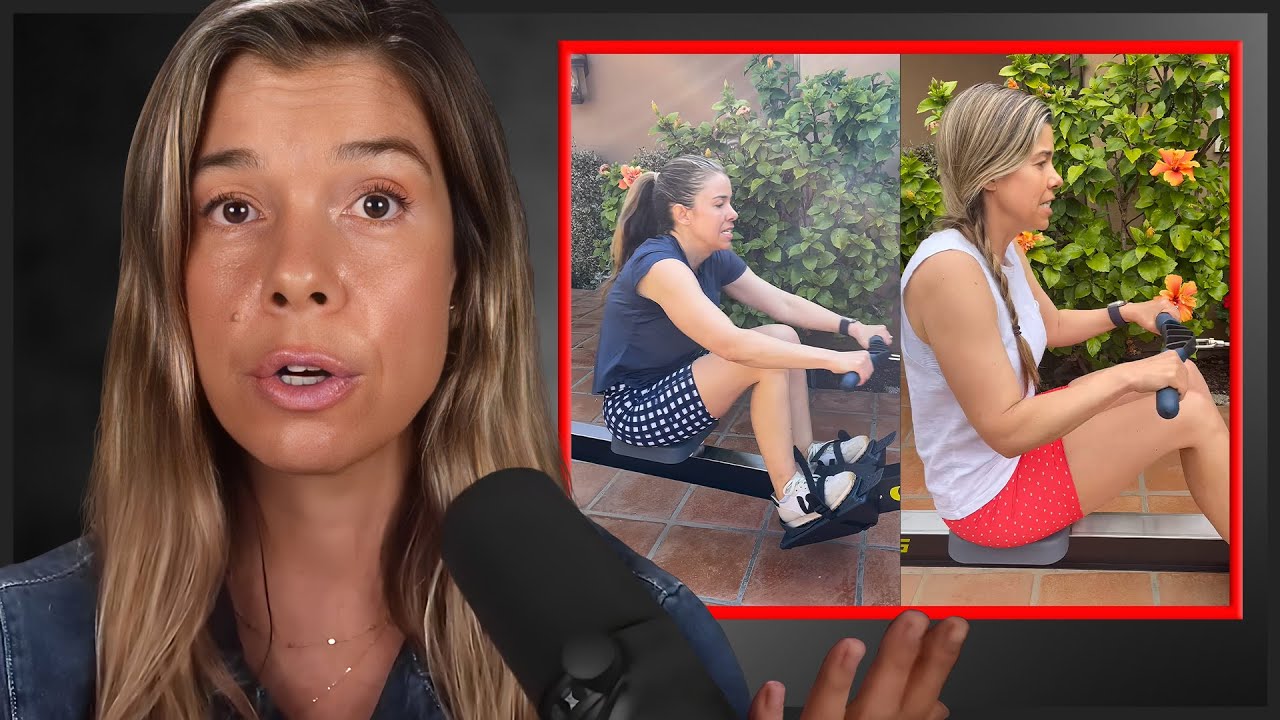
And so, in that sense, like, If I'm doing like a workout that has dips, then I'm definitely going, I would say, near failure because the workout has me doing so many of them and it's in a fixed amount of time. I have to do so many rounds of it and it's kind of like a circuit. And so, I often find that I am definitely going near failure on things like pushups or dips. I haven't really been going too much to failure except for, I would say with my deadlifts and my squats, it's more of— I would say actually it is pretty close to failure, but it's just like I'm doing a heavy— it's like a heavy weight for me and I'm only doing, I'm doing like 3 reps total of it. So, that's kind of how my strength training workouts go. I also do incorporate, I also do Peloton Tabatas as well.
So, like, I'll just, and I incorporate those like on top of these other workouts, you know, I'll just do like a 20-minute or 15-minute Tabata where I just get like a quick hit. Oftentimes I'll do it before a podcast or I'll do it You know, if I need some extra energy or boost to feel better, to be, you know, just have blood flow to my brain.
Hear new content from Rhonda on The Aliquot, our member's only podcast

Listen in on our regularly curated interview segments called "Aliquots" released every week on our premium podcast The Aliquot. Aliquots come in two flavors: features and mashups.
- Hours of deep dive on topics like fasting, sauna, child development surfaced from our enormous collection of members-only Q&A episodes.
- Important conversational highlights from our interviews with extra commentary and value. Short but salient.